
Polar Bear on a Snowy Lake Dock
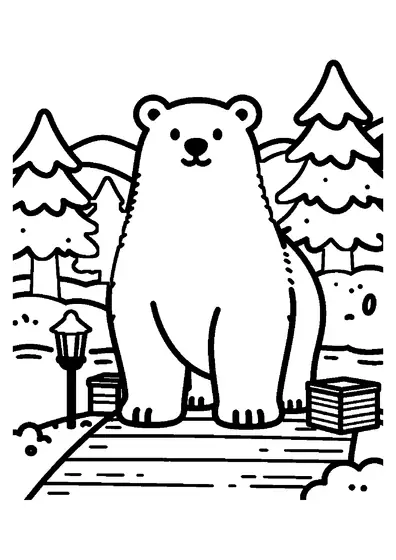
This scene shows a polar bear near a wooden dock beside a frozen lake.

A4 format (landscape), black outlines on a white background · for home and classroom use
All coloring pages: Bear Coloring Pages
Similar coloring pages: Bear Coloring Pages


What else can you print? Free, no account needed
Custom Name Coloring Pages
Enter your child's name to generate a custom coloring page featuring large outline letters to color and decorate.
Open generator →Connect the Dots Generator
Eight connect-the-dots pictures across three difficulty levels. Features faint outline guides for younger children and dots only for older kids.
Open generator →Printables
Worksheets, tracing lines, mazes and dot-to-dots in A4.
Browse printables →
Polar Bear by a Frozen Lake
A polar bear stands near a wooden dock built along the edge of a frozen lake covered in snow. Wooden mooring posts line the waterside where boats usually tie up during warmer months. During the cold season, ice transforms the lake shore, creating a quiet winter setting around the dock structure.
Arctic Coastal Habitats and Ice
Polar bears rely on sea ice and frozen bodies of water to travel across their northern habitats. Wooden docks built in Arctic towns often face thick seasonal ice freezing around their pilings every winter. Thick marine ice allows these large mammals to hunt seals effectively along frozen coastal edges.
Real Colors of a Polar Bear and Lake Shore
- Polar bear fur: translucent hair appearing white or creamy yellow under sunlight
- Polar bear skin: black beneath the thick fur layer
- Polar bear nose: dark black
- Wooden dock post: weathered gray or dark brown timber
- Frozen lake ice: pale blue or white