
Polar Bear by a Frozen Mountain Waterfall
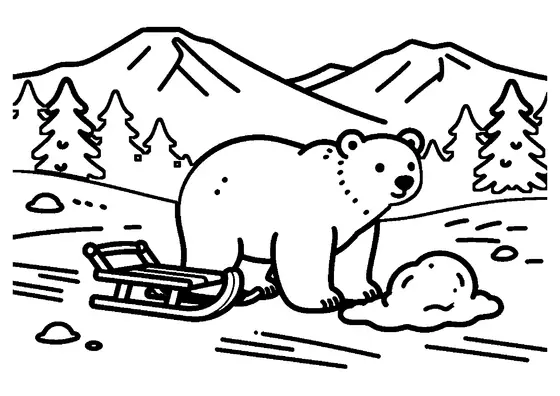
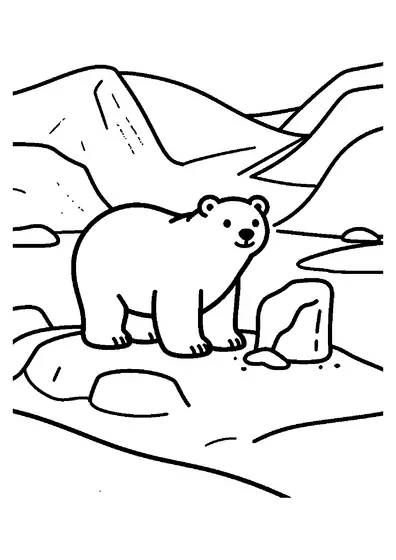
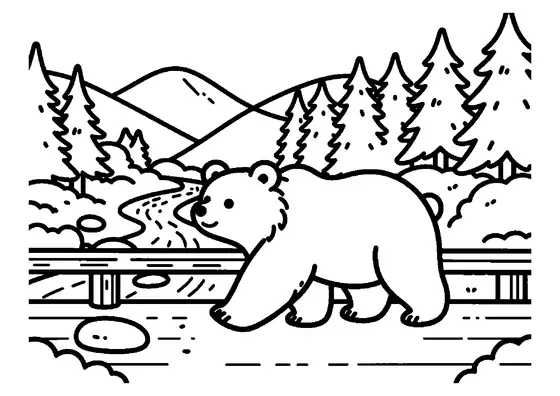
A polar bear stands near massive hanging icicles formed along a frozen mountain waterfall in winter.

A4 format (portrait), black outlines on a white background · for home and classroom use
All coloring pages: Bear Coloring Pages
Similar coloring pages: Bear Coloring Pages


What else can you print? Free, no account needed
Custom Name Coloring Pages
Enter your child's name to generate a custom coloring page featuring large outline letters to color and decorate.
Open generator →Connect the Dots Generator
Eight connect-the-dots pictures across three difficulty levels. Features faint outline guides for younger children and dots only for older kids.
Open generator →Printables
Worksheets, tracing lines, mazes and dot-to-dots in A4.
Browse printables →
Polar Bear near Ice Formations and Waterfalls
A polar bear walks past large icicles suspended over a frozen mountain waterfall. In subzero temperatures, rushing water gradually solidifies into thick ice columns along steep rocky drops. Frozen cascades create dramatic icy landscapes across northern mountainous regions.
How Waterfalls Freeze into Giant Icicles
When temperatures drop far below freezing, flowing mountain streams begin to form thin ice layers along edge rocks. Water continuing to drip over frozen edges gradually builds long, heavy icicles that can merge into solid ice walls. These massive frozen structures often remain standing until warm spring thaws arrive.
True Colors of Waterfalls and Arctic Wildlife
- Polar bear fur: ivory white, pale yellow, or light cream
- Icicles and frozen waterfall: light ice blue, turquoise, or clear white
- Mountain rock surfaces: dark slate gray, granite gray, or charcoal
- Polar bear paw pads: dark black or charcoal gray