
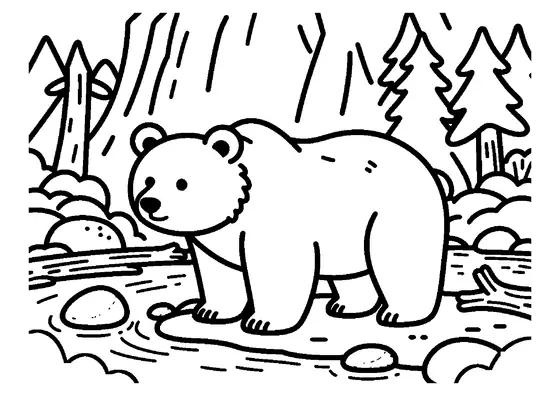
Brown Bear Crossing a Mountain Stream
Wild brown bears travel across vast territories and frequently navigate mountain streams along their natural routes.

A4 format (landscape), black outlines on a white background · for home and classroom use
All coloring pages: Bear Coloring Pages
Similar coloring pages: Bear Coloring Pages


What else can you print? Free, no account needed
Custom Name Coloring Pages
Enter your child's name to generate a custom coloring page featuring large outline letters to color and decorate.
Open generator →Connect the Dots Generator
Eight connect-the-dots pictures across three difficulty levels. Features faint outline guides for younger children and dots only for older kids.
Open generator →Printables
Worksheets, tracing lines, mazes and dot-to-dots in A4.
Browse printables →
Brown Bears in Mountain Habitats
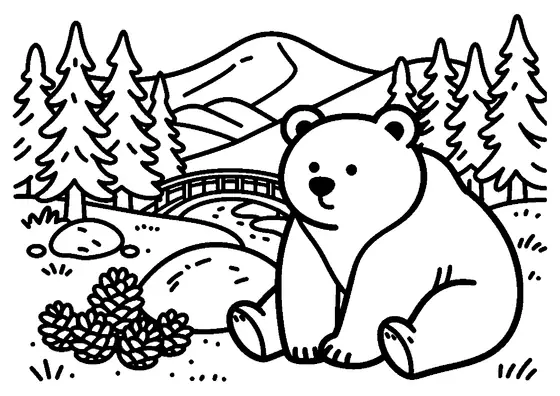
A brown bear moving across a mountain stream represents a classic scene from wilderness landscapes. Mountain waterways act as natural corridors for wildlife, providing fresh drinking water and seasonal food sources. Wooden footbridges built across rushing streams allow both animals and wilderness hikers to cross safely without entering cold, swift currents.
Wildlife Navigation and Water Crossing
Brown bears are strong swimmers and capable travelers that regularly cross water to reach new feeding grounds. They often select shallow crossings or narrow sections of rivers where the water flow is manageable. In areas frequented by humans, wildlife sometimes utilizes timber bridges or low crossings constructed over mountain creeks.
Real Colors of Brown Bears and Streams
- Brown bear fur: rich brown, dark chocolate, or golden tan hues
- Wooden footbridge: weathered gray, rustic timber brown, or muted tan
- Mountain stream water: clear blue, icy cyan, or foamy white currents
- Bear snout and paws: dark charcoal, brownish gray, or blackish tones