
Polar Bear by a Frozen Lagoon
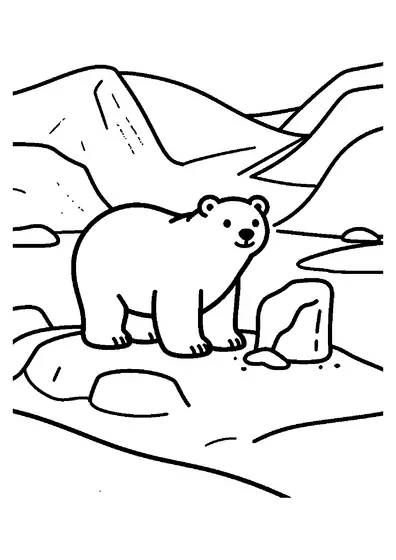
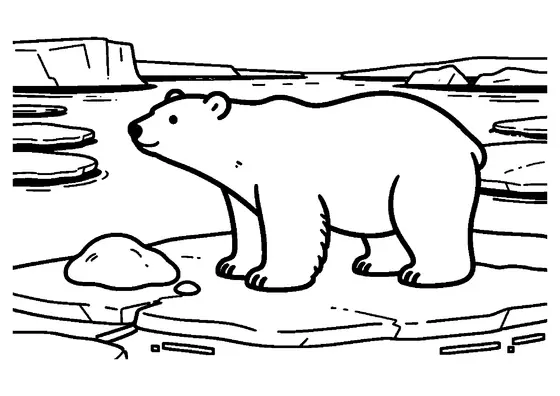
A tranquil polar bear sits beside floating ice floes while looking out across a frozen Arctic lagoon.

A4 format (landscape), black outlines on a white background · for home and classroom use
All coloring pages: Bear Coloring Pages
Similar coloring pages: Bear Coloring Pages

What else can you print? Free, no account needed
Custom Name Coloring Pages
Enter your child's name to generate a custom coloring page featuring large outline letters to color and decorate.
Open generator →Connect the Dots Generator
Eight connect-the-dots pictures across three difficulty levels. Features faint outline guides for younger children and dots only for older kids.
Open generator →Printables
Worksheets, tracing lines, mazes and dot-to-dots in A4.
Browse printables →
A Polar Bear Resting Near a Frozen Lagoon
A polar bear sits calmly along the shore of a frozen lagoon near floating ice floes. In the background, distant mountain peaks line the Arctic horizon.
Coastal Lagoons in Arctic Climates
Arctic lagoons are shallow bodies of coastal water protected by barrier islands or gravel spits. During extreme winter conditions, low salinity allows these calm sheltered waters to freeze over faster than open marine waters.
Real Colors of Arctic Lagoon Landscapes
- Polar bear fur: ivory white, yellowish cream, or light off-white
- Frozen lagoon ice: pale icy blue, frosted white, or soft turquoise
- Ice floe: crisp bright white with deep blue undersides
- Distant mountains: slate gray, dark violet-gray, or snow-capped white
- Polar bear nose: solid pitch black