
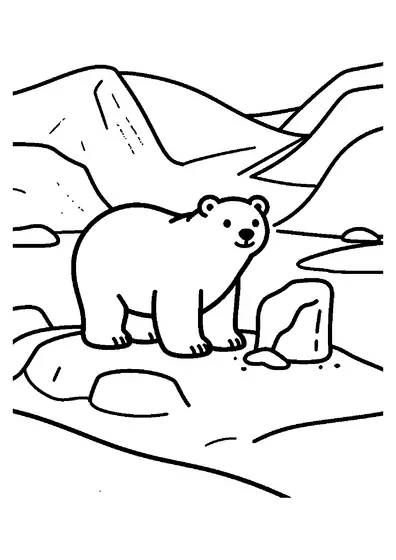
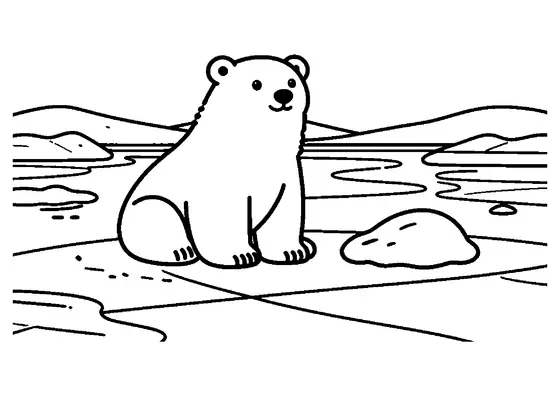
Polar bear on an ice floe with ice blocks
High in the freezing northern waters, a solitary Arctic animal navigates open ocean waves atop a thick drifting sheet of ice.

A4 format (landscape), black outlines on a white background · for home and classroom use
All coloring pages: Bear Coloring Pages
Similar coloring pages: Bear Coloring Pages



What else can you print? Free, no account needed
Custom Name Coloring Pages
Enter your child's name to generate a custom coloring page featuring large outline letters to color and decorate.
Open generator →Connect the Dots Generator
Eight connect-the-dots pictures across three difficulty levels. Features faint outline guides for younger children and dots only for older kids.
Open generator →Printables
Worksheets, tracing lines, mazes and dot-to-dots in A4.
Browse printables →
The Frozen World of the Arctic Ocean
An Arctic scene features a large polar bear positioned on a floating ice floe drifting across ocean waves. Surrounding the floating platform are separate blocks of ice resting in the cold sea. This northern environment illustrates the vast marine habitat where polar bears spend much of their lives traveling across sea ice.
Adaptation to Sea Ice Environments
Polar bears rely heavily on sea ice floes as mobile platforms to hunt seals, travel long distances, and rest between swims. Their thick fur and dense layer of blubber keep them warm in subzero temperatures and icy waters. Beneath their translucent outer guard hairs, polar bear skin is actually black, which helps absorb heat from sunlight.
True Colors of Arctic Wildlife and Sea Ice
- Polar bear fur: off-white, creamy ivory, or pale yellow in sunlight
- Polar bear nose and paws: solid black skin
- Ice floe and ice blocks: crisp white highlights with deep turquoise blue crevices
- Ocean waves: deep navy blue, teal, or icy indigo water