
Polar Bear by a Small Dock
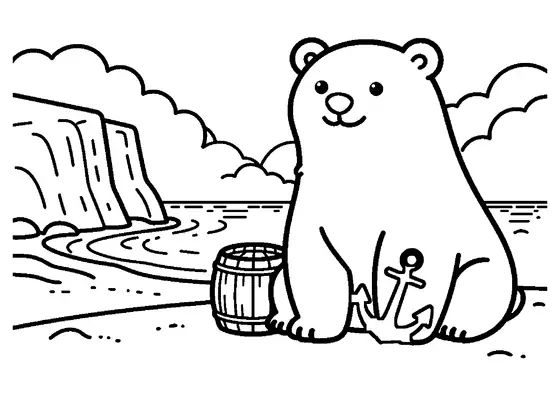
A large polar bear stands near a small wooden dock situated along a snowy Arctic coastline.

A4 format (landscape), black outlines on a white background · for home and classroom use
All coloring pages: Bear Coloring Pages
Similar coloring pages: Bear Coloring Pages




What else can you print? Free, no account needed
Custom Name Coloring Pages
Enter your child's name to generate a custom coloring page featuring large outline letters to color and decorate.
Open generator →Connect the Dots Generator
Eight connect-the-dots pictures across three difficulty levels. Features faint outline guides for younger children and dots only for older kids.
Open generator →Printables
Worksheets, tracing lines, mazes and dot-to-dots in A4.
Browse printables →
A Polar Bear in an Arctic Dock Setting
This cold-climate scene shows an Arctic polar bear near a small wooden dock built along a wintry shore. The icy environment blends human coastal structures with the expanse of frozen northern terrain.
Adaptations of Polar Bears in the Arctic
Polar bears are the largest land carnivores on Earth and are native to the icy waters of the Arctic Circle. Their thick coat appears white to camouflage them against snow, but their fur fibers are actually transparent and hollow to trap solar heat. Underneath their dense fur, polar bears have black skin that absorbs warmth from the sun.
Real Colors of an Arctic Coastal Environment
- Polar bear fur: Creamy white, ivory, or pale yellow-white.
- Polar bear nose and footpads: Jet black skin.
- Wooden dock timbers: Frosty gray, dark weathered wood, or icy brown.
- Snow and ice: Pure white with pale blue and turquoise shadow reflections.
- Arctic ocean water: Deep navy blue, dark blue-green, or icy slate gray.