
Steam Train on Covered Bridge
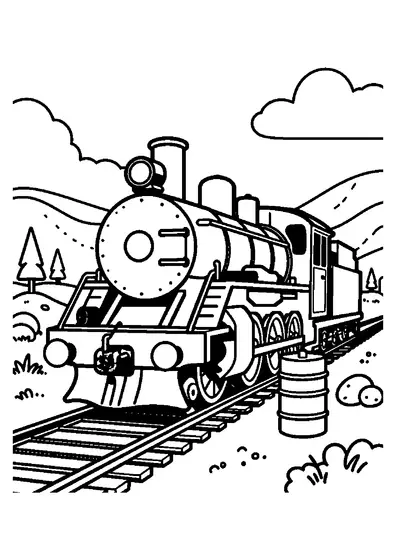
A heavy steam locomotive pulling a tender moves across a covered wooden bridge spanning a quiet river flanked by trees.

A4 format (landscape), black outlines on a white background · for home and classroom use
All coloring pages: Train Coloring Pages
Similar coloring pages: Train Coloring Pages




What else can you print? Free, no account needed
Custom Name Coloring Pages
Enter your child's name to generate a custom coloring page featuring large outline letters to color and decorate.
Open generator →Connect the Dots Generator
Eight connect-the-dots pictures across three difficulty levels. Features faint outline guides for younger children and dots only for older kids.
Open generator →Printables
Worksheets, tracing lines, mazes and dot-to-dots in A4.
Browse printables →
A Vintage Steam Locomotive Crossing a Covered Bridge
This scenery features a large steam train pulling a tender as it crosses a massive wooden covered bridge. Below the structure, a tranquil river flows past, bordered by trees along the banks. The combination of historical railway engineering and natural surroundings showcases how train tracks were built across waterways in rugged terrain.
Fascinating Facts About Covered Bridges and Steam Locomotives
Covered wooden bridges were originally built with roofs and walls to protect their load-bearing wooden trusses from rain and snow, significantly extending their lifespan. Steam locomotives rely on burning coal or wood to boil water, creating high-pressure steam that drives heavy pistons to turn the wheels. When crossing wooden bridges, early train crews had to manage sparks carefully to prevent fires along the timber roof structure.
Real Colors of Historic Railway Scenes
- Steam locomotive body: Dark black or deep gray steel
- Tender coal load: Matte black coal chunks
- Wooden covered bridge: Weathered brown timber or muted red paint
- River water: Reflective blue, green, or murky brown depending on depth
- Riverside tree leaves: Natural shade of green during summer or golden brown in autumn