
Steam Train Among Granite Boulders
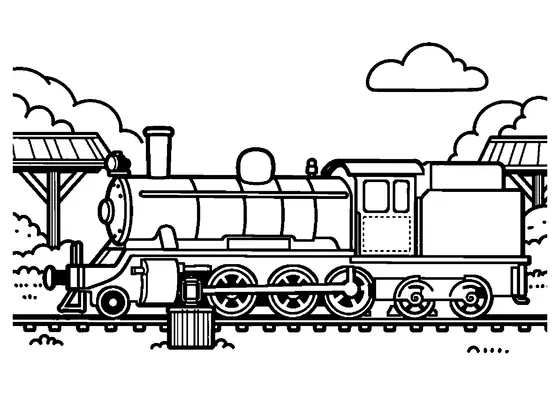
Heavy steam locomotives once hauled passengers and freight across rugged mountain routes framed by massive stone formations.

A4 format (portrait), black outlines on a white background · for home and classroom use
All coloring pages: Train Coloring Pages
Similar coloring pages: Train Coloring Pages



What else can you print? Free, no account needed
Custom Name Coloring Pages
Enter your child's name to generate a custom coloring page featuring large outline letters to color and decorate.
Open generator →Connect the Dots Generator
Eight connect-the-dots pictures across three difficulty levels. Features faint outline guides for younger children and dots only for older kids.
Open generator →Printables
Worksheets, tracing lines, mazes and dot-to-dots in A4.
Browse printables →
Steam Locomotives Operating in Rocky Terrain
Steam trains powered by coal and water carried passengers across steep mountain passes and rocky valleys. A classic locomotive pulling a tender moves along steel tracks laid directly between large granite boulders. Heavy iron wheels turn along the rails, providing the traction necessary to pull heavy train cars through mountain passages.
Natural Granite Formations Along Railway Routes
Granite is an extremely dense igneous rock created deep underground from cooling magma over millions of years. When civil engineers built nineteenth-century railroads, blasting through solid granite required immense labor, heavy machinery, and precise placement of explosives. Today, many historic mountain railway routes cut directly through exposed granite cliffs, giving travelers views of ancient geological formations.
Natural Colors of Steam Locomotives and Granite Boulders
- Steam locomotive body: dark black, dark gray, or deep green with polished metal accents
- Tender car: matte black or dark charcoal gray
- Locomotive wheels: dark gray steel with silver or light gray rims
- Granite boulders: speckled shades of light gray, tan, and charcoal
- Railway tracks: dark steel gray rails supported by dark brown wooden ties