
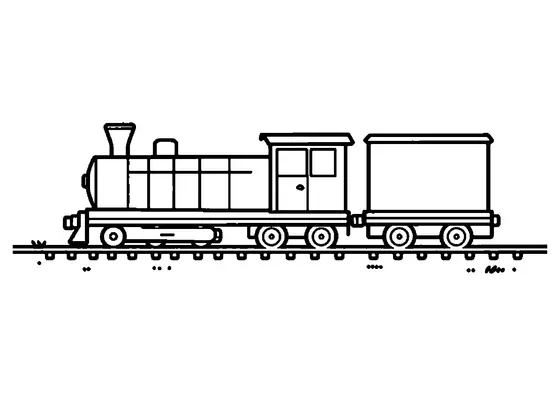
Steam Locomotive at a Small Station in Winter
A vintage train engine rests at a quiet rural depot along snowy tracks during the cold winter season.

A4 format (landscape), black outlines on a white background · for home and classroom use
All coloring pages: Train Coloring Pages
Similar coloring pages: Train Coloring Pages


What else can you print? Free, no account needed
Custom Name Coloring Pages
Enter your child's name to generate a custom coloring page featuring large outline letters to color and decorate.
Open generator →Connect the Dots Generator
Eight connect-the-dots pictures across three difficulty levels. Features faint outline guides for younger children and dots only for older kids.
Open generator →Printables
Worksheets, tracing lines, mazes and dot-to-dots in A4.
Browse printables →
Steam Locomotive Standing at a Village Railway Station
The illustration presents a heavy steam locomotive shown from a three-quarter angle. The engine features a large cylindrical boiler held by metal bands, a flared chimney cap, a front headlight, and a high cab wall on the left side. Four large spoked driving wheels connect to a visible side rod along the track. Behind the driver cab stands a section of a small station platform canopy supported by a single post, with a round emblem mounted on the station building wall. To the right of the engine, a vertical signal post with a circular disk marks the side of the railway tracks laid with wooden ties.
How Steam Engines Handled Winter Conditions
Steam locomotives produced tremendous amounts of heat, which helped prevent internal water pipes from freezing even in subzero temperatures. Railway crews often relied on mechanical turntables and water cranes at small rural stops to service engines before continuing long journeys across frozen landscapes. In heavy weather, special snowplow attachments were mounted directly to the front frame to clear drifts from remote tracks.
Real Colors of a Steam Train
- Locomotive boiler and cab: Dark black or deep charcoal steel
- Driving wheels and connecting rods: Dark gray metal with silver or red accents
- Station canopy and wooden post: Weathered brown timber
- Signal post and disk: Black metal post with a red or white target disk
- Railway tracks and ties: Steel gray rails on dark brown wooden ties