
Commuter Train Along a Tree Avenue
Modern commuter trains carry thousands of daily passengers along scenic railway corridors lined with planted trees.

A4 format (landscape), black outlines on a white background · for home and classroom use
All coloring pages: Train Coloring Pages
Similar coloring pages: Train Coloring Pages


What else can you print? Free, no account needed
Custom Name Coloring Pages
Enter your child's name to generate a custom coloring page featuring large outline letters to color and decorate.
Open generator →Connect the Dots Generator
Eight connect-the-dots pictures across three difficulty levels. Features faint outline guides for younger children and dots only for older kids.
Open generator →Printables
Worksheets, tracing lines, mazes and dot-to-dots in A4.
Browse printables →
Modern Commuter Rail Systems Along Tree-Lined Corridors
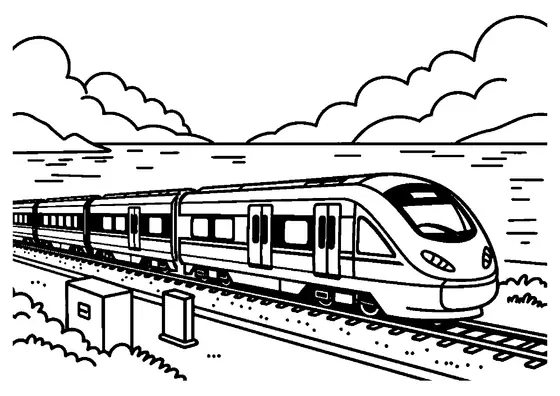
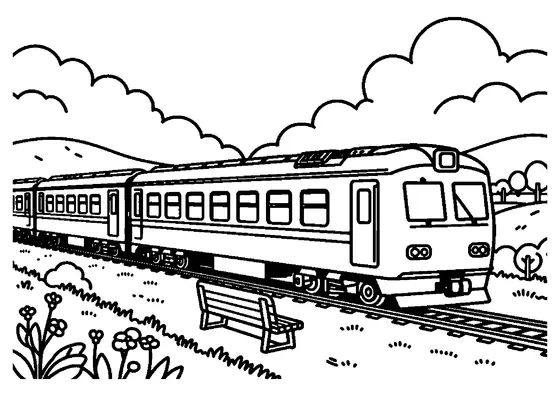
Commuter trains provide efficient transportation between suburban neighborhoods and central city districts. A passenger train travels along straight steel tracks running parallel to an avenue of mature trees. These rail corridors offer commuters a reliable route through urban and suburban landscapes without traffic delays.
Railway Corridors and Urban Trees
Urban planners frequently plant rows of trees along rail tracks to create natural sound barriers that absorb noise from passing trains. These green buffers help lower ambient temperatures in suburban areas and reduce soil erosion along elevated railway embankments. Additionally, trees planted beside tracks absorb carbon dioxide emissions from nearby roadways.
Colors of Commuter Trains and Avenue Trees
- Commuter train exterior: bright white, silver, or blue with dark accent stripes
- Train windows: tinted dark gray or light blue glass
- Tree leaves: vibrant green in summer, shifting to yellow, orange, or brown in autumn
- Tree trunks and bark: deep brown, gray-brown, or dark charcoal
- Steel railway tracks: metallic gray rails resting on dark gray ballast gravel