
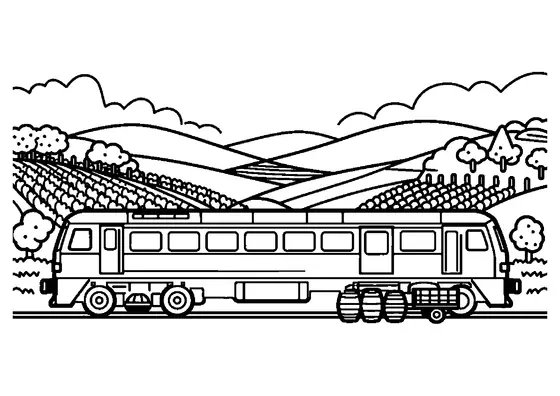
Diesel Train Over the River
A heavy diesel locomotive crosses a low concrete bridge over a broad river winding through the countryside.

A4 format (landscape), black outlines on a white background · for home and classroom use
All coloring pages: Train Coloring Pages
Similar coloring pages: Train Coloring Pages



What else can you print? Free, no account needed
Custom Name Coloring Pages
Enter your child's name to generate a custom coloring page featuring large outline letters to color and decorate.
Open generator →Connect the Dots Generator
Eight connect-the-dots pictures across three difficulty levels. Features faint outline guides for younger children and dots only for older kids.
Open generator →Printables
Worksheets, tracing lines, mazes and dot-to-dots in A4.
Browse printables →
Diesel Engine Crossing a River Bridge
A diesel locomotive leads a train across a low bridge span constructed over a wide water channel. The railway line carries heavy cargo across the river, connecting opposite shorelines with steady rail transport.
How Diesel Trains Cross Waterways Safely
Low railway bridges built across broad rivers rely on sturdy concrete piers anchored deep into the riverbed to withstand strong river currents. Diesel locomotives generate immense electric power through internal diesel engines to maintain high pulling force while moving freight across water crossings. Bridge engineers design track decks with vibration dampeners to protect the structure as heavy engines roll overhead.
Real Colors of a River Railway Crossing
- Diesel locomotive cab: Bright yellow, blue, or red
- Freight car metal: Rust orange, dark brown, or gray
- Bridge concrete piers: Muted gray or weathered beige
- River water surface: Deep blue, green, or murky brown
- Riverbank soil: Dark brown or gravel gray