
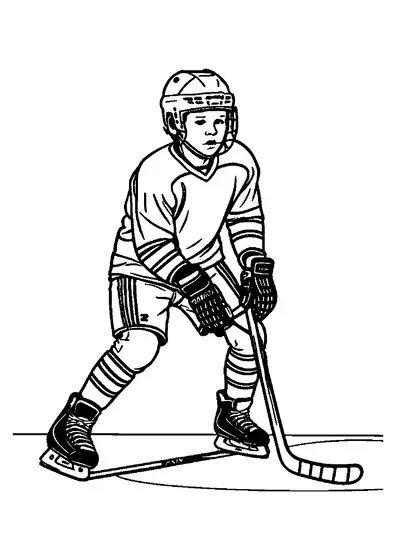
Hockey Player Before Practice
An ice hockey player in full protective gear stands on the rink surface holding a stick near a puck before team practice.

A4 format (portrait), black outlines on a white background · for home and classroom use
All coloring pages: Winter Sports Coloring Pages
Similar coloring pages: Winter Sports Coloring Pages




What else can you print? Free, no account needed
Custom Name Coloring Pages
Enter your child's name to generate a custom coloring page featuring large outline letters to color and decorate.
Open generator →Connect the Dots Generator
Eight connect-the-dots pictures across three difficulty levels. Features faint outline guides for younger children and dots only for older kids.
Open generator →Printables
Worksheets, tracing lines, mazes and dot-to-dots in A4.
Browse printables →
Hockey Player Preparing on the Ice
Ice hockey relies on specialized protective gear to keep players safe during fast movements and puck control drills. Standalone rinks provide smooth ice surfaces where athletes practice skating techniques, stickhandling, and puck placement under controlled conditions.
Ice Rink and Hockey Equipment Facts
Ice hockey pucks are made of vulcanized rubber and frozen before games to prevent them from bouncing on the ice. The smooth surface of an indoor rink is carefully maintained using heavy resurfacing machines that lay down thin layers of water to freeze quickly.
Colors of Ice Hockey Equipment
- Ice rink surface: clear pale blue ice with white lines
- Hockey puck: solid matte black
- Player helmet: glossy black, white, or team color red
- Hockey stick: natural wooden brown or dark composite gray