
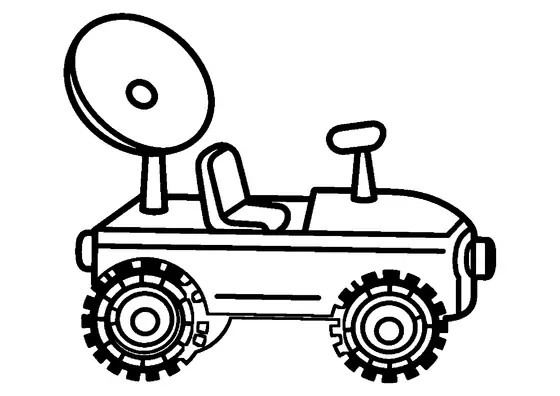
Ice Rover with a Drill
A heavy research machine equipped with continuous tracks traverses frozen landscapes to sample sub-surface ice.

A4 format (portrait), black outlines on a white background · for home and classroom use
All coloring pages: Planet and Solar System Coloring Pages
Similar coloring pages: Planet and Solar System Coloring Pages


What else can you print? Free, no account needed
Custom Name Coloring Pages
Enter your child's name to generate a custom coloring page featuring large outline letters to color and decorate.
Open generator →Connect the Dots Generator
Eight connect-the-dots pictures across three difficulty levels. Features faint outline guides for younger children and dots only for older kids.
Open generator →Printables
Worksheets, tracing lines, mazes and dot-to-dots in A4.
Browse printables →
Ice Rover Built for Extreme Cold
Exploration of icy planetary bodies requires machinery capable of operating on slick, frozen surfaces. This specialized ice rover features heavy track treads for stability, a short core drill mounted on its chassis, and a tall camera mast to inspect surrounding terrain. The heavy tracks distribute the vehicle mass evenly to prevent breaking through brittle crusts.
Drilling into Alien Ice Sheets
Drilling into frozen terrain allows planetary scientists to analyze water ice and trapped atmospheric gases preserved beneath the surface. Deep ice cores act as geological time capsules, offering evidence of climate history over millions of years. Drilling bits for cold environments are often tipped with industrial diamond edges to slice through hardened ice blocks.
Colors of Ice Exploration Equipment
- Track treads: dark rubberized charcoal or heavy black steel
- Core drill assembly: polished silver chrome or dark steel
- Main body frame: high-visibility yellow, orange, or white thermal coating
- Camera mast casing: matte light gray with dark camera lenses