
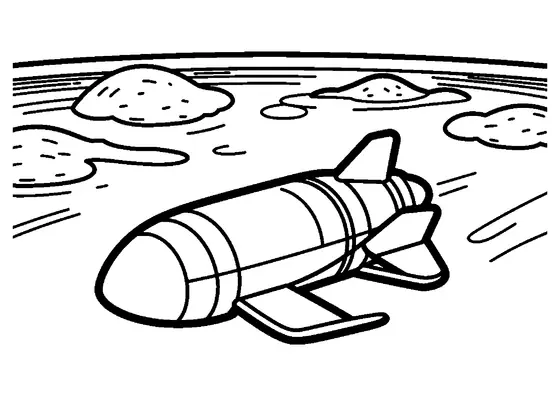
Rocket over Hexagonal Coast
A rocket flies along a coastal shoreline characterized by giant hexagonal basalt columns, crashing ocean waves, and drifting clouds.

A4 format (landscape), black outlines on a white background · for home and classroom use
All coloring pages: Space and Rocket Coloring Pages
Similar coloring pages: Space and Rocket Coloring Pages


What else can you print? Free, no account needed
Custom Name Coloring Pages
Enter your child's name to generate a custom coloring page featuring large outline letters to color and decorate.
Open generator →Connect the Dots Generator
Eight connect-the-dots pictures across three difficulty levels. Features faint outline guides for younger children and dots only for older kids.
Open generator →Printables
Worksheets, tracing lines, mazes and dot-to-dots in A4.
Browse printables →
Aerial Trajectory Over Geometric Basalt Cliffs
A rocket glides across a coastal landscape dominated by massive geometric stone columns. Ocean waves break against the base of these columnar basalt cliffs while scattered clouds float in the sky overhead.
Formation of Hexagonal Basalt Columns
Columnar basalt structures form when thick lava flows cool down slowly and contract, creating regular geometric cracks that typically form six-sided hexagonal pillars. Earth features famous locations like the Giant's Causeway in Northern Ireland and Devils Postpile in California, where thousands of interlocking basalt columns meet the sea. Similar volcanic basalt formations have also been identified on Mars.
Realistic Colors of Basalt Coastal Formations
- Basalt columns: dark charcoal gray, deep black, or weathered brown
- Ocean water: deep navy blue with frothy white wave crests
- Rocket hull: titanium silver or bright white with red safety markings
- Sky clouds: light gray or pale off-white
- Sea spray: crisp white or light cyan