
Rocket at Giant Radio Telescope
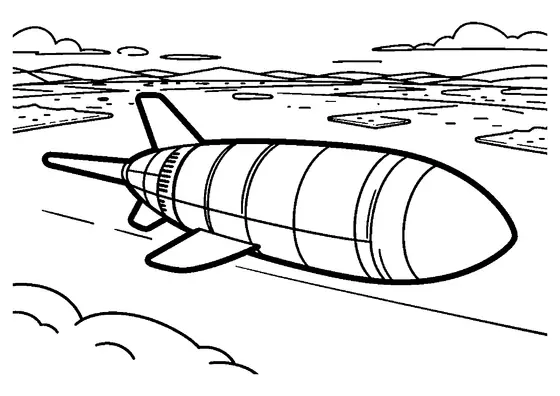
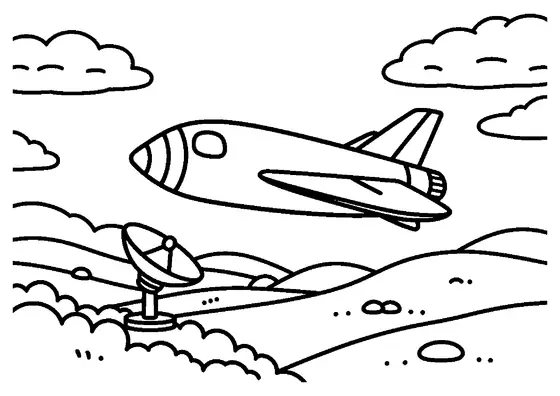
A scientific rocket sits on a rocky plain beside a giant radio telescope dish against a backdrop of distant hills.

A4 format (portrait), black outlines on a white background · for home and classroom use
All coloring pages: Space and Rocket Coloring Pages
Similar coloring pages: Space and Rocket Coloring Pages

What else can you print? Free, no account needed
Custom Name Coloring Pages
Enter your child's name to generate a custom coloring page featuring large outline letters to color and decorate.
Open generator →Connect the Dots Generator
Eight connect-the-dots pictures across three difficulty levels. Features faint outline guides for younger children and dots only for older kids.
Open generator →Printables
Worksheets, tracing lines, mazes and dot-to-dots in A4.
Browse printables →
Scientific Base on a Remote Rocky Plain
A specialized research rocket is stationed next to an enormous parabolic radio telescope dish on a wide plateau. The scientific facility sits on flat, rocky terrain surrounded by rolling hills in the background.
Radio Astronomy and Deep Space Communication
Radio telescopes use large concave parabolic dishes to focus weak radio waves emitted by distant stars, galaxies, and spacecraft onto a central receiver. Unlike optical telescopes, radio dishes can detect signals through cosmic dust clouds and operate both day and night regardless of sunlight. Scientists use these massive antennas to track space probes and search for radio signals from deep space.
True Colors of Observatory Equipment
- Radio telescope dish: bright white or metallic aluminum silver
- Dish support structure: dark steel gray or industrial blue
- Rocket casing: glossy white with dark gray or red accents
- Rocky plain ground: sandy brown, ochre, or dark gray gravel
- Distant hills: dusty purple, slate gray, or brownish-tan