
Rocket on a Cactus Planet
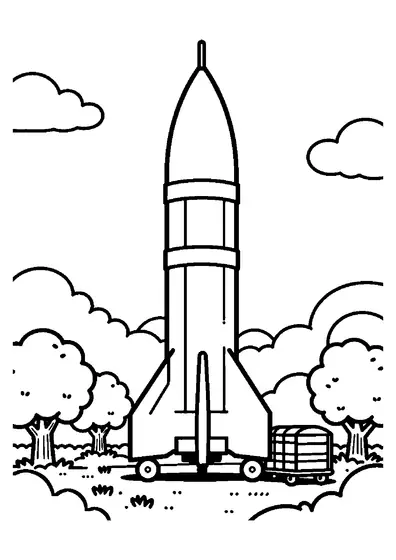
An expedition setting features a space vehicle resting near supply containers and towering desert cacti across an alien landscape.

A4 format (portrait), black outlines on a white background · for home and classroom use
All coloring pages: Space and Rocket Coloring Pages
Similar coloring pages: Space and Rocket Coloring Pages

What else can you print? Free, no account needed
Custom Name Coloring Pages
Enter your child's name to generate a custom coloring page featuring large outline letters to color and decorate.
Open generator →Connect the Dots Generator
Eight connect-the-dots pictures across three difficulty levels. Features faint outline guides for younger children and dots only for older kids.
Open generator →Printables
Worksheets, tracing lines, mazes and dot-to-dots in A4.
Browse printables →
Space Exploration on a Desert Alien Planet
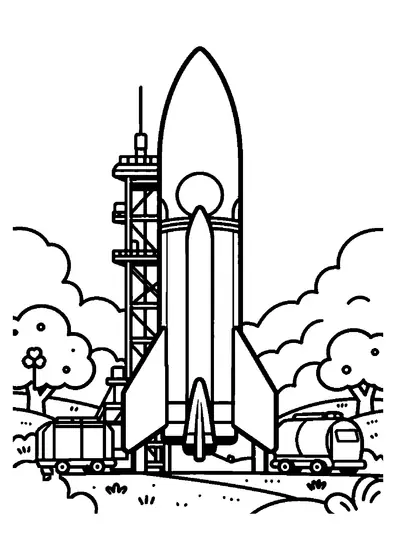
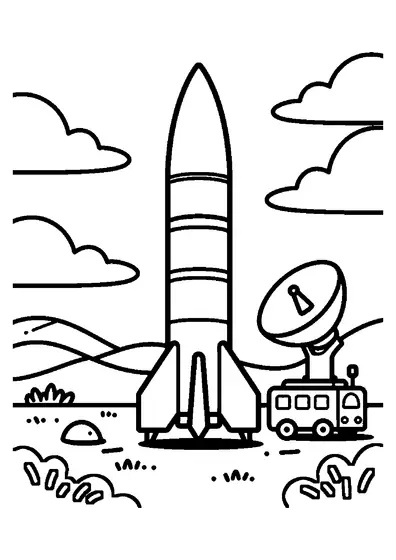
A space vessel rests on a wide open plain dominated by giant cacti. Beside the craft, ground transport equipment and storage crates sit ready for surface operations. The landscape combines technical gear with unusual planetary flora, depicting a quiet pause during a surface mission.
How Plants and Rockets Handle Extreme Environments
Cacti survive in harsh conditions on Earth by storing large amounts of water in their thick stems, which allows them to withstand long droughts. Spacecraft design uses similar survival strategies, relying on heavy insulation and heat shields to withstand extreme thermal changes during planetary missions. Combining desert survival traits with space engineering helps scientists design habitats for arid extraterrestrial terrain.
Real-World Colors of Desert and Space Equipment
- Rocket hull: brilliant white or metallic silver with heat-resistant thermal panels
- Giant cacti: deep sage green or muted olive with pale yellow spines
- Storage crate: industrial yellow or dull gray metal
- Transport cart: dark charcoal gray or painted steel blue
- Planetary ground: reddish-brown dirt or dusty tan soil