
Rocket on a Basalt Coast
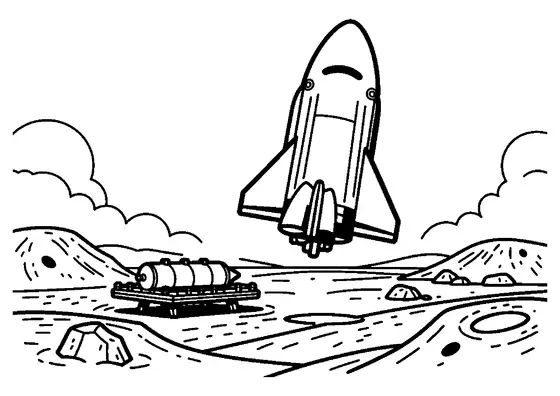
A space vessel touches down near a surface rover on a rugged coastline formed by towering basalt columns and ocean waves.

A4 format (portrait), black outlines on a white background · for home and classroom use
All coloring pages: Space and Rocket Coloring Pages
Similar coloring pages: Space and Rocket Coloring Pages



What else can you print? Free, no account needed
Custom Name Coloring Pages
Enter your child's name to generate a custom coloring page featuring large outline letters to color and decorate.
Open generator →Connect the Dots Generator
Eight connect-the-dots pictures across three difficulty levels. Features faint outline guides for younger children and dots only for older kids.
Open generator →Printables
Worksheets, tracing lines, mazes and dot-to-dots in A4.
Browse printables →
Coastal Landing of Space Exploration Vehicles
Landing near coastal environments allows space missions to explore both land formations and liquid bodies on planetary surfaces. Here, a research rocket settles onto a shore dominated by massive basalt formations while a surface rover collects environmental samples nearby. Ocean waves crashing against rocky pillars highlight the dynamic interplay between geological structures and liquid bodies.
Features of Volcanic Basalt Columns
Basalt columns form when lava rich in iron and magnesium cools rapidly and contracts, cracking into regular hexagonal or polygonal pillars. Similar volcanic rock formations exist on Earth at locations like the Giant's Causeway in Northern Ireland and Columbia River basalt flows. Planetary geologists search for basalt on other worlds because it indicates past volcanic activity and tectonic processes.
Natural Colors of Coastal Formations and Rovers
- Basalt columns: Dark charcoal, volcanic black, or weather-worn gray
- Ocean waves: Deep blue-green with white ocean foam at the crests
- Space vehicle hull: Metallic silver or titanium gray with yellow reflective details
- Surface rover: White insulated casing with dark gray treaded tires
- Shoreline rocks: Dark slate and wet brown stone