
Rocket by Ocean Cliffs
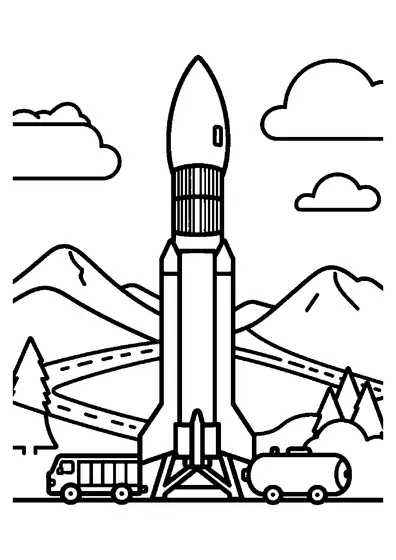
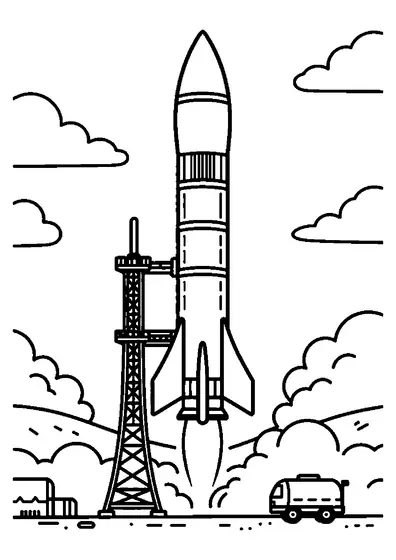
A tall rocket stands on a seaside launchpad positioned near steep ocean cliffs, storage tanks, and rolling coastal waves.

A4 format (landscape), black outlines on a white background · for home and classroom use
All coloring pages: Space and Rocket Coloring Pages
Similar coloring pages: Space and Rocket Coloring Pages



What else can you print? Free, no account needed
Custom Name Coloring Pages
Enter your child's name to generate a custom coloring page featuring large outline letters to color and decorate.
Open generator →Connect the Dots Generator
Eight connect-the-dots pictures across three difficulty levels. Features faint outline guides for younger children and dots only for older kids.
Open generator →Printables
Worksheets, tracing lines, mazes and dot-to-dots in A4.
Browse printables →
Coastal Spaceport Launch Facilities
A multi-stage rocket rests on a reinforced launchpad near the coastline, flanked by fuel storage tanks and technical equipment. High rocky cliffs border the installation, while ocean waters roll against the shore nearby. Space agencies often place launch complexes right on sea coasts so that discarded rocket stages fall safely into open water during early flight phases.
Why Launchpads Are Built Near Oceans
Coastal locations offer major safety advantages for orbital space missions. When a rocket ascends into the sky, rocket boosters separate from the main fuselage after exhausting their fuel supply. Positioning launch facilities near ocean waters ensures these heavy metal components drop harmlessly into water far from populated towns and cities.
Real Colors of Coastal Launch Infrastructure
- Rocket fuselage: crisp white, bright silver, or bold black
- Fuel storage tanks: bright white, aluminum gray, or industrial orange
- Launchpad structure: steel gray, dark iron, or concrete beige
- Ocean waves: deep blue, seafoam green, or navy
- Coastal rock cliffs: dark brown, tan, or granite gray