
Hornbeam Bolete Beside a Hazelnut
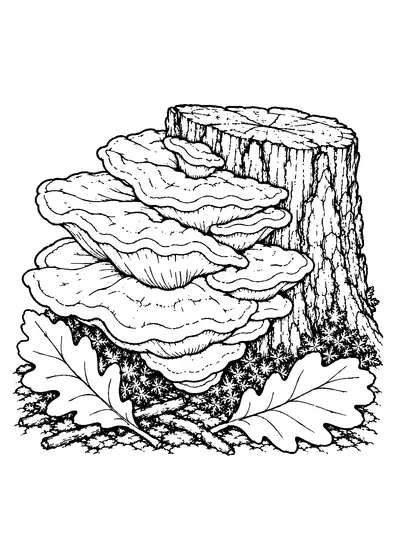
One hornbeam bolete with a speckled stem stands beside a hazelnut, fallen leaves, moss, twigs, and small stones.
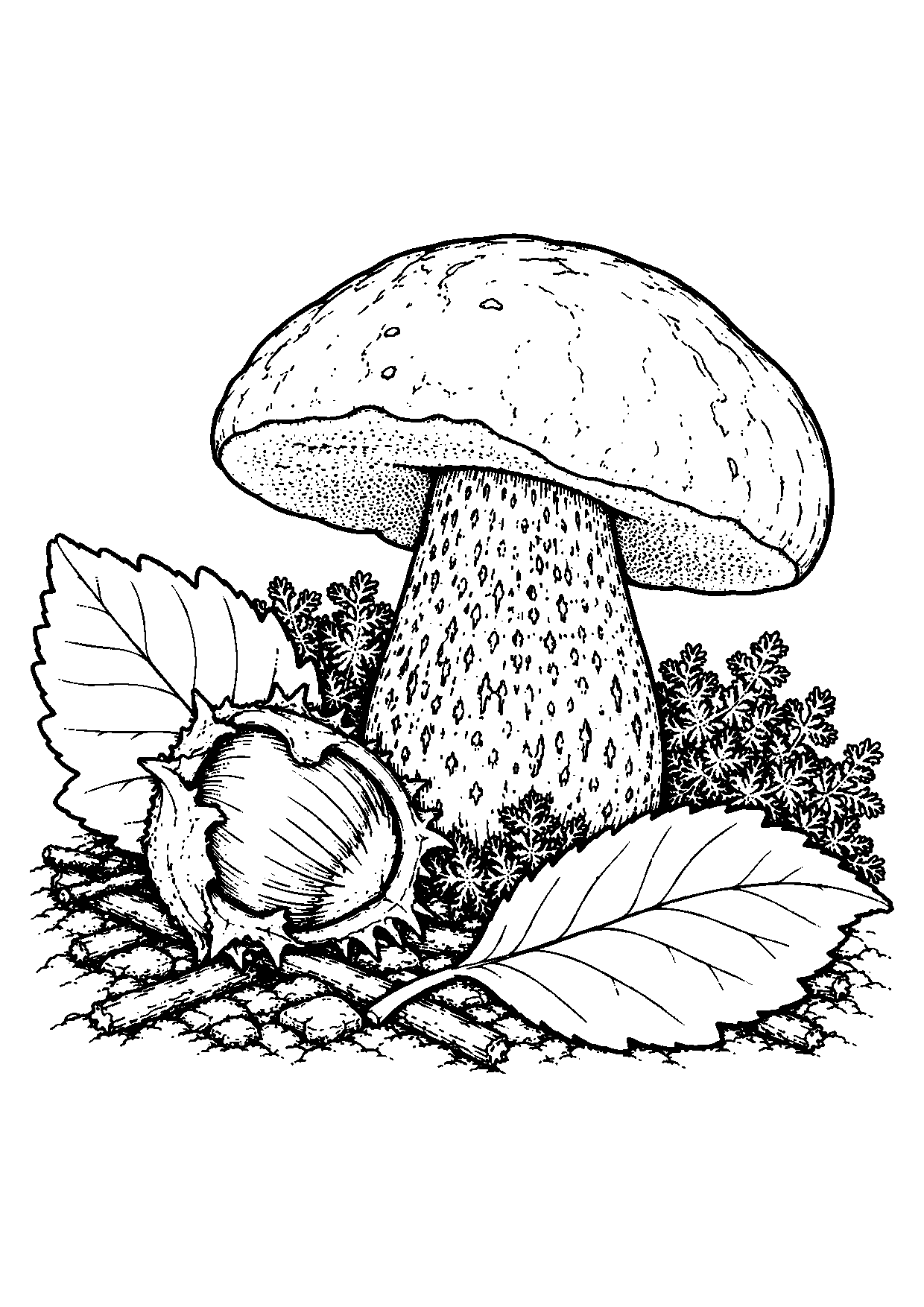
A4 format (portrait), black outlines on a white background · for home and classroom use
All coloring pages: Mushroom Coloring Pages
Similar coloring pages: Mushroom Coloring Pages
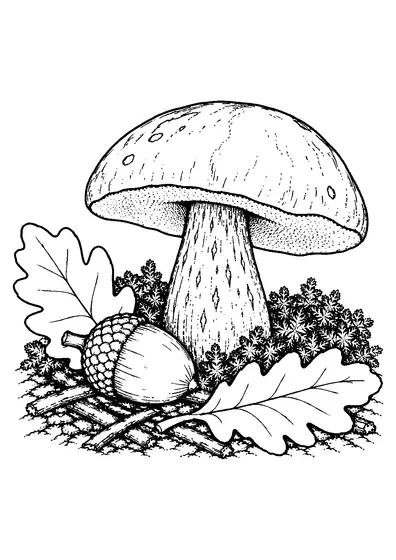
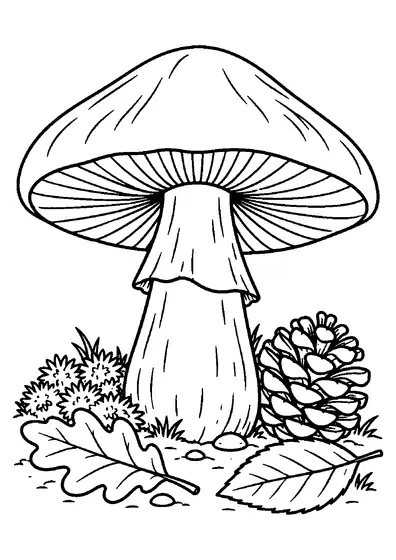
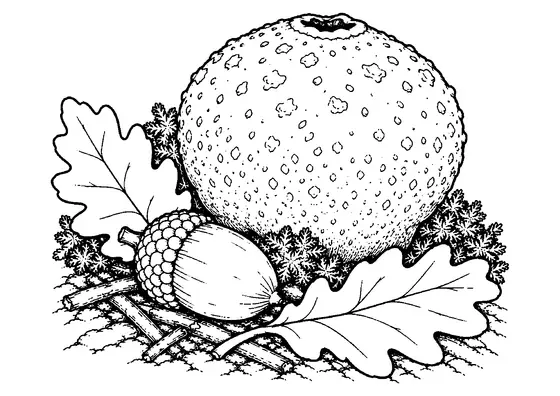


What else can you print? Free, no account needed
Custom Name Coloring Pages
Enter your child's name to generate a custom coloring page featuring large outline letters to color and decorate.
Open generator →Connect the Dots Generator
Eight connect-the-dots pictures across three difficulty levels. Features faint outline guides for younger children and dots only for older kids.
Open generator →Printables
Worksheets, tracing lines, mazes and dot-to-dots in A4.
Browse printables →
What is shown in the scene
The main subject is a single bolete with a broad rounded cap and a thick stem marked by many small speckles. A hazelnut in its husk lies beside the mushroom. Two fallen leaves, patches of moss, short twigs, a few small stones, and close forest-floor details surround the group. Most of the background remains plain white, keeping attention on the cap, textured stem, and autumn objects near the mushroom.
Hornbeam bolete facts
Hornbeam boletes belong to a group of bolete mushrooms that live in mycorrhizal partnership with trees, especially hornbeam. Instead of gills, boletes have a layer of tiny tubes ending in pores on the underside of the cap. In many Leccinum and related species, the stem is covered with small darker scales or scabers, which create the speckled look shown in this scene. The cap is often brownish and becomes broader as the fruiting body matures. Below ground, fungal hyphae connect with tree roots and exchange water and mineral nutrients for sugars produced by the tree. The mushroom above the soil is only the temporary fruiting body.
Color ideas
- Use hazel brown, warm brown, tan, or gray-brown for the rounded cap.
- Keep the stem pale cream or beige and add darker brown speckles.
- Color the hazelnut warm reddish brown and its husk fresh or muted green.
- Try yellow, ochre, orange, or rust on the fallen leaves.
- Add several greens to the moss and soft browns or grays to twigs and stones.