
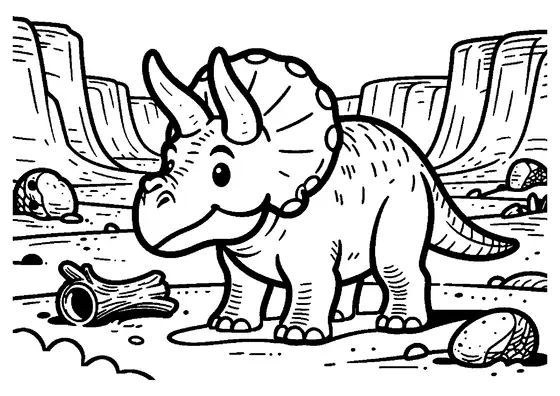
Triceratops by a Rocky Forest Cave
A prehistoric landscape sets the scene for a triceratops standing near the entrance of a rocky woodland cave.

A4 format (landscape), black outlines on a white background · for home and classroom use
All coloring pages: Printable Coloring Pages for Kids
Similar coloring pages: Printable Coloring Pages for Kids



What else can you print? Free, no account needed
Custom Name Coloring Pages
Enter your child's name to generate a custom coloring page featuring large outline letters to color and decorate.
Open generator →Connect the Dots Generator
Eight connect-the-dots pictures across three difficulty levels. Features faint outline guides for younger children and dots only for older kids.
Open generator →Printables
Worksheets, tracing lines, mazes and dot-to-dots in A4.
Browse printables →
Triceratops in a Prehistoric Mountain Cave Environment
This scene presents a classic herbivorous dinosaur framed by rugged rock formations and the mouth of a forest cavern. Rocks surround the dinosaur, indicating an ancient habitat where stone overhangs provided shelter and dense vegetation grew nearby.
Ancient Habitats of Three-Horned Herbivores
Triceratops species inhabited North American coastal plains and river valleys during the Late Cretaceous period, roughly 68 to 66 million years ago. These massive plant-eaters relied on their low-slung heads and sharp beaks to crop tough prehistoric foliage, such as palms, ferns, and cycads. Cave structures and cliff overhangs often accumulated natural rock debris, forming shelter from severe weather.
Natural Colors of the Triceratops and Its Surroundings
- Triceratops skin: Grayish brown, dull olive, or muted earth tones suited for camouflage among trees
- Horns and beak: Off-white, ivory, or pale tan keratin coating over solid bone
- Bony frill: Dark brown or mottled green patterns to blend into dense ferns
- Cave rocks: Slate gray, dark charcoal, and weathered granite shades
- Forest soil: Deep brown, damp loam, and mossy green undertones