
Triceratops on a Fern Plain
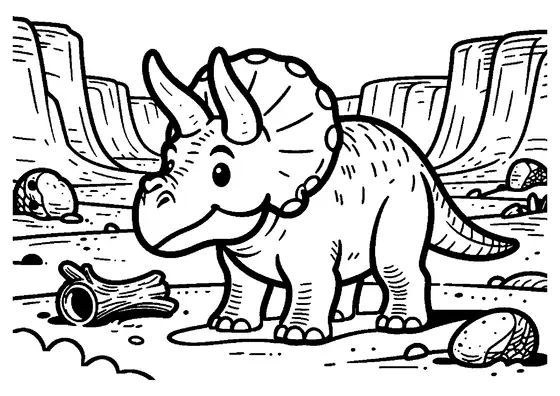
A horned Triceratops walks across an open Cretaceous plain dotted with prehistoric plants, a fallen log, and a smooth stone.

A4 format (landscape), black outlines on a white background · for home and classroom use
All coloring pages: Printable Coloring Pages for Kids
Similar coloring pages: Printable Coloring Pages for Kids

What else can you print? Free, no account needed
Custom Name Coloring Pages
Enter your child's name to generate a custom coloring page featuring large outline letters to color and decorate.
Open generator →Connect the Dots Generator
Eight connect-the-dots pictures across three difficulty levels. Features faint outline guides for younger children and dots only for older kids.
Open generator →Printables
Worksheets, tracing lines, mazes and dot-to-dots in A4.
Browse printables →
Horned Triceratops on a Prehistoric Plain
A sturdy herbivorous dinosaur grazes peacefully across a wide open plain. Grounded along the landscape are ancient plants, a decaying fallen log, and a rounded stone resting in the soil.
Unique Features of Triceratops and Cretaceous Vegetation
The massive head frill of Triceratops was made of solid bone covered in keratin, the same tough protein found in rhino horns and bird beaks. Low-lying plants and fallen trees dominated Cretaceous plains, creating rich feeding areas for low-built herbivores equipped with beak-like jaws.
Authentic Colors of Horned Dinosaurs and Plain Flora
- Triceratops hide: Rough gray-brown, dusty tan, or muted forest green
- Head horns: Pale ivory, off-white, or weathered bone gray
- Fallen log: Dark timber brown, weathered gray, or mossy green along rotting edges
- Ancient stone: Medium slate gray, beige, or sandy brown
- Plain foliage: Rich fern green or yellowish-green primitive fronds