
Tiered Stand with Patterned Easter Eggs
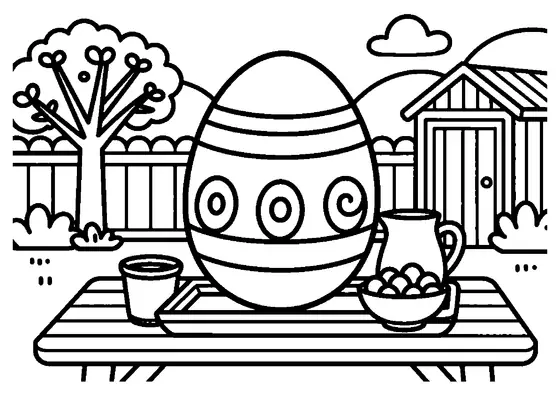
A festive tiered display stand topped with a patterned Easter egg rests on a dining table next to a salt shaker and a napkin.

A4 format (landscape), black outlines on a white background · for home and classroom use
All coloring pages: Easter Egg Coloring Pages
Similar coloring pages: Easter Egg Coloring Pages



What else can you print? Free, no account needed
Custom Name Coloring Pages
Enter your child's name to generate a custom coloring page featuring large outline letters to color and decorate.
Open generator →Connect the Dots Generator
Eight connect-the-dots pictures across three difficulty levels. Features faint outline guides for younger children and dots only for older kids.
Open generator →Printables
Worksheets, tracing lines, mazes and dot-to-dots in A4.
Browse printables →
Tiered Display Stand with Easter Eggs on a Dining Table
A dining room arrangement showcases a tiered display stand holding decorated Easter eggs, with one egg gracing the top level. The stand sits on a wooden dining table alongside table setting items, including a salt shaker and a cloth napkin.
Dining Table Traditions and Tableware
Tiered display stands gained popularity during the Victorian era as serving pieces for afternoon tea treats, appetizers, and festive table centerpieces. Table napkins were used in ancient Greece and Rome, where guests originally brought their own cloth to wipe hands during banquets. Rock salt harvested from salt mines or evaporated seawater is refined into tiny clear crystals used for everyday meal seasoning.
Colors of Dining Table Centerpiece Elements
- Patterned Easter egg: pastel violet, mint green, coral pink, or soft yellow
- Tiered display stand: polished brass gold, white porcelain, or wrought iron black
- Dining table surface: warm walnut brown, natural pine tan, or dark mahogany
- Salt shaker: clear glass with a silver metal cap and white salt crystals
- Folded napkin: linen white, sage green, or deep burgundy red