
Squirrel Among Wood Anemones in an Old Forest
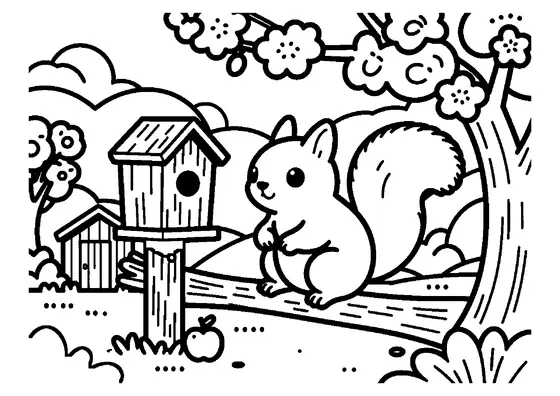
A peaceful woodland scene features a squirrel resting on an old tree stump surrounded by wild anemones.

A4 format (portrait), black outlines on a white background · for home and classroom use
All coloring pages: Flower Coloring Pages
Similar coloring pages: Flower Coloring Pages



What else can you print? Free, no account needed
Custom Name Coloring Pages
Enter your child's name to generate a custom coloring page featuring large outline letters to color and decorate.
Open generator →Connect the Dots Generator
Eight connect-the-dots pictures across three difficulty levels. Features faint outline guides for younger children and dots only for older kids.
Open generator →Printables
Worksheets, tracing lines, mazes and dot-to-dots in A4.
Browse printables →
A Woodland Scene with a Squirrel and Forest Flowers
In forest ecosystems, tree stumps provide natural perching spots for small animals while spring wild anemones cover the ground. This woodland landscape combines wildlife and spring flora in a natural setting.
Fascinating Facts About Wood Anemones and Squirrels
Wood anemones bloom early in spring before trees produce leaves, taking advantage of the sunlight reaching the forest floor. These small flowers open fully during bright daytime and close up at night or during rainy weather. Tree squirrels often use elevated stumps to keep watch for predators while searching for seeds.
Natural Colors of the Forest Wildlife and Flowers
- Wood anemones: white petals often tinted with faint pink on the underside
- Wood anemone stems: slender green stems with small green leaves
- Squirrel fur: reddish-brown or gray depending on the species and season
- Tree stump: dark brown bark with weathered gray inner wood
- Forest soil: deep brown covered with decaying foliage