
Deer Standing in a Meadow of Calla Lilies
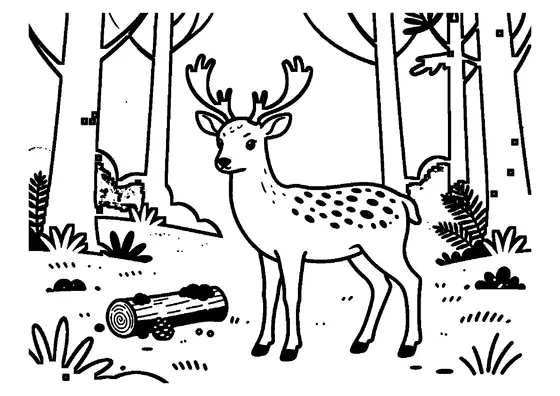
A slender deer with broad ears stands peacefully surrounded by elegant calla lily blooms in a forest clearing.

A4 format (portrait), black outlines on a white background · for home and classroom use
All coloring pages: Flower Coloring Pages
Similar coloring pages: Flower Coloring Pages

What else can you print? Free, no account needed
Custom Name Coloring Pages
Enter your child's name to generate a custom coloring page featuring large outline letters to color and decorate.
Open generator →Connect the Dots Generator
Eight connect-the-dots pictures across three difficulty levels. Features faint outline guides for younger children and dots only for older kids.
Open generator →Printables
Worksheets, tracing lines, mazes and dot-to-dots in A4.
Browse printables →
A Forest Deer Among Calla Lily Blossoms
In a quiet woodland clearing, a deer stands amidst a wild patch of trumpet-shaped calla lilies. Forest clearings provide safe grazing areas where deer can remain alert to their surroundings while enjoying lush meadow plants.
Botanical Facts About Calla Lilies and Deer Habitats
Despite their common name, calla lilies are not true lilies but belong to the Araceae plant family, characterized by a smooth spadix surrounded by a cup-shaped bract called a spathe. Deer often seek shelter in open grassy clearings where sunlight encourages flowering plants to grow thickly under the forest canopy.
True Colors of Forest Deer and Calla Lilies
- Deer coat: warm reddish tan in summer or muted grayish brown in winter
- Calla lily spathe: ivory white, soft yellow, or deep purple maroon
- Central flower spadix: bright golden yellow
- Deer ears and muzzle: dark gray tips with soft white inner trim