
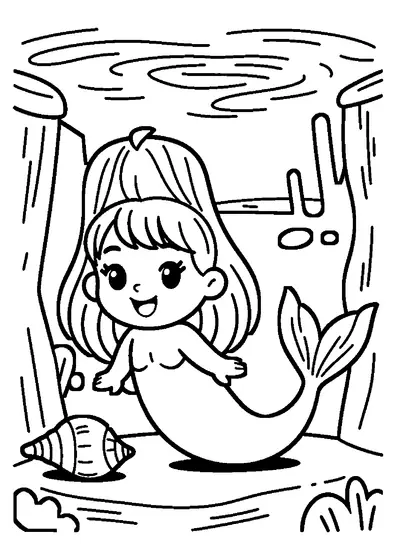
Seashell in a Coral Amphitheater
A mermaid stands holding a conch shell inside a curved wall of coral formations deep under the sea.

A4 format (portrait), black outlines on a white background · for home and classroom use
All coloring pages: Mermaid Coloring Pages
Similar coloring pages: Mermaid Coloring Pages


What else can you print? Free, no account needed
Custom Name Coloring Pages
Enter your child's name to generate a custom coloring page featuring large outline letters to color and decorate.
Open generator →Connect the Dots Generator
Eight connect-the-dots pictures across three difficulty levels. Features faint outline guides for younger children and dots only for older kids.
Open generator →Printables
Worksheets, tracing lines, mazes and dot-to-dots in A4.
Browse printables →
Curved Reef Walls Surrounding a Mermaid
Natural reef structures can form semicircular enclosures on the seabed when coral colonies grow along prevailing ocean currents. In this underwater setting, a mermaid holds a conch shell while surrounded by massive coral formations that shape the ocean floor into a natural theater.
Coral Amphitheaters and Ocean Formations
Curved coral reefs develop over hundreds of years as tiny coral polyps build calcium carbonate structures layer upon layer. These natural barriers protect sheltered marine areas from harsh ocean currents, creating quiet spots where sediment settles gently. Many marine species seek shelter in these curved rock structures because the walls provide refuge from larger predators swimming in open waters.
Authentic Colors of Coral Reefs and Shells
- Conch shell exterior: Pale peach, creamy pink, or tan
- Conch shell interior: Vibrant pink or orange-pink
- Coral reef formations: Warm yellow, brown, purple, or reddish orange
- Ocean seabed sand: Fine beige or off-white