
Mermaid in a Coral Garden
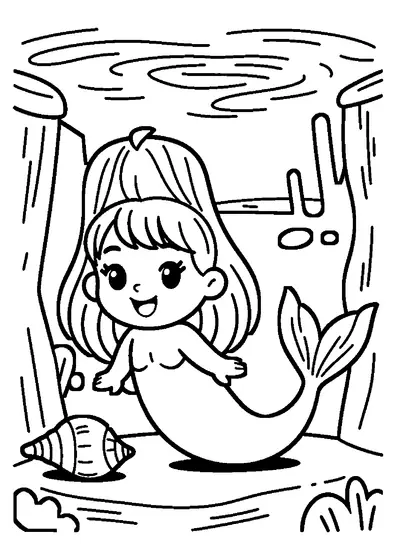
An underwater scene displays a mermaid holding a conch shell among coral formations and sea anemones on rippled sand.

A4 format (portrait), black outlines on a white background · for home and classroom use
All coloring pages: Mermaid Coloring Pages
Similar coloring pages: Mermaid Coloring Pages




What else can you print? Free, no account needed
Custom Name Coloring Pages
Enter your child's name to generate a custom coloring page featuring large outline letters to color and decorate.
Open generator →Connect the Dots Generator
Eight connect-the-dots pictures across three difficulty levels. Features faint outline guides for younger children and dots only for older kids.
Open generator →Printables
Worksheets, tracing lines, mazes and dot-to-dots in A4.
Browse printables →
Underwater Life in a Coral Reef
A smiling mermaid rests in a quiet coral garden beneath the ocean surface. She holds a conch shell while surrounded by coral formations, sea anemones, and rippled sand along the seafloor. The ocean environment features living coral structures that form natural shelters for marine creatures.
Facts About Coral Gardens
Coral reefs are formed by tiny living organisms called coral polyps that build hard calcium structures over hundreds of years. Sea anemones, which attach themselves to rocks and corals, share a mutually beneficial relationship with clownfish that hide among their stinging tentacles. Conch shells belong to sea snails and grow larger as the snail inside builds its spiral home.
Natural Colors of Coral Reefs
- Mermaid tail: Iridescent shades of emerald green, seafoam blue, or shimmering pink
- Coral reefs: Deep orange, purple, red, yellow, and bright pink
- Sea anemones: Pastel pink, violet, green, and vibrant orange
- Conch shell: Soft cream, peach, pale pink, and beige
- Ocean sand: Warm beige, light tan, and off-white