
Mermaid by a Shipwreck
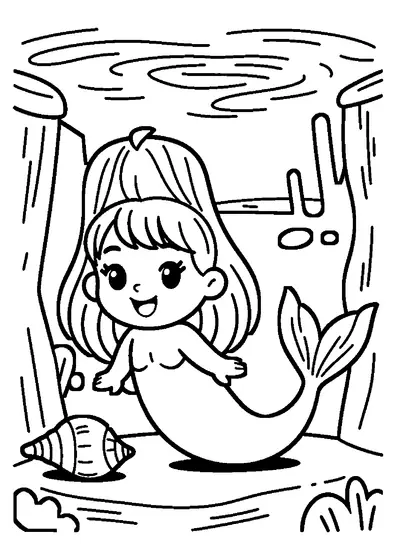
A mermaid rests near the wooden hull and mast of an ancient shipwreck lying on the ocean reef.

A4 format (landscape), black outlines on a white background · for home and classroom use
All coloring pages: Mermaid Coloring Pages
Similar coloring pages: Mermaid Coloring Pages



What else can you print? Free, no account needed
Custom Name Coloring Pages
Enter your child's name to generate a custom coloring page featuring large outline letters to color and decorate.
Open generator →Connect the Dots Generator
Eight connect-the-dots pictures across three difficulty levels. Features faint outline guides for younger children and dots only for older kids.
Open generator →Printables
Worksheets, tracing lines, mazes and dot-to-dots in A4.
Browse printables →
Sunken Ship Deck and Reef Environment
Sunken vessels that settle onto tropical reefs gradually transform into artificial reef habitats over several decades. On the ocean floor, a mermaid visits a resting ship whose wooden deck, mast, and hull lie quietly alongside an open seashell.
How Shipwrecks Become Ocean Reefs
Wooden ships submerged in saltwater undergo decomposition while simultaneously providing solid surfaces for marine life to attach. Barnacles, sponges, and hard corals cover the decaying timber, turning structural beams into complex shelter zones. Over time, the ship hull integrates into the surrounding reef ecosystem, offering protection to sea creatures in open marine environments.
Real Colors of Wooden Shipwrecks and Marine Shells
- Submerged wooden hull: Dark brown, weathered gray, or greenish black
- Ship mast and deck timber: Muted olive brown or charcoal
- Open seashell lining: Pearl white, soft iridescent pink, or cream
- Surrounding reef floor: Warm sand tan or light gray