
Pearl Shell Beneath the Mangroves
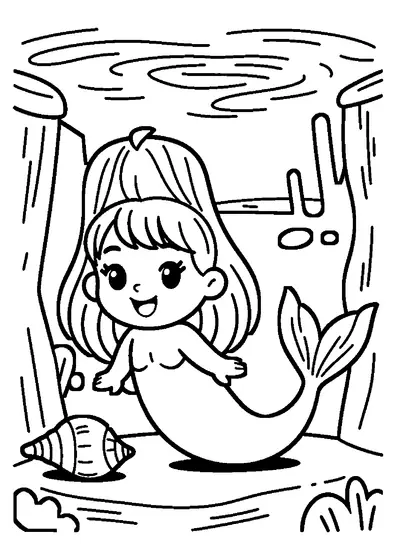
A mermaid rests in a shallow coastal cove beneath tangled mangrove roots beside a shell containing a round pearl.

A4 format (portrait), black outlines on a white background · for home and classroom use
All coloring pages: Mermaid Coloring Pages
Similar coloring pages: Mermaid Coloring Pages



What else can you print? Free, no account needed
Custom Name Coloring Pages
Enter your child's name to generate a custom coloring page featuring large outline letters to color and decorate.
Open generator →Connect the Dots Generator
Eight connect-the-dots pictures across three difficulty levels. Features faint outline guides for younger children and dots only for older kids.
Open generator →Printables
Worksheets, tracing lines, mazes and dot-to-dots in A4.
Browse printables →
Shallow Cove Under Mangrove Tree Roots
Mangrove forests grow along sheltered tropical shorelines where saltwater meets land, anchoring themselves with intricate aerial root networks. Resting in a calm cove beneath these descending roots, a mermaid sits near an open shell holding a smooth, spherical pearl.
Coastal Mangrove Habitats and Pearl Formation
Mangrove tree roots extend into coastal waters to stabilize muddy sediments and protect shorelines from storm surges. The complex root network filters water and creates a quiet sanctuary rich in organic nutrients. Pearls develop naturally inside certain mollusks when a foreign particle gets trapped inside the shell, prompting the animal to coat the irritant with layers of glossy nacre over several years.
Colors Found in Coastal Mangroves and Pearls
- Mangrove root bark: Dark brown, charcoal gray, or reddish brown
- Pearl exterior: Iridescent white, soft cream, or silver-pink
- Pearl oyster shell exterior: Rough gray-brown or dark olive
- Shallow cove water: Clear teal, pale turquoise, or light blue