
Mermaid by a Volcanic Reef
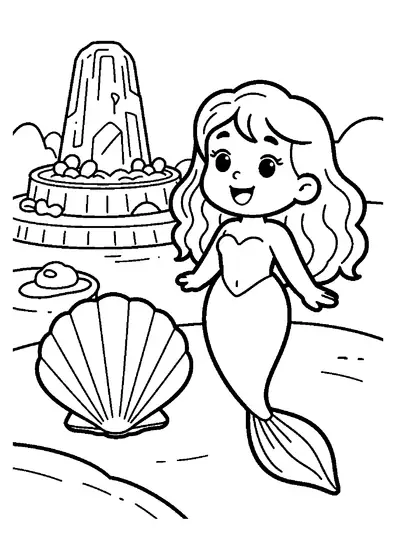
A mermaid rests near a giant scallop shell on a volcanic seabed featuring smooth ocean rocks and hydrothermal vents.

A4 format (landscape), black outlines on a white background · for home and classroom use
All coloring pages: Mermaid Coloring Pages
Similar coloring pages: Mermaid Coloring Pages




What else can you print? Free, no account needed
Custom Name Coloring Pages
Enter your child's name to generate a custom coloring page featuring large outline letters to color and decorate.
Open generator →Connect the Dots Generator
Eight connect-the-dots pictures across three difficulty levels. Features faint outline guides for younger children and dots only for older kids.
Open generator →Printables
Worksheets, tracing lines, mazes and dot-to-dots in A4.
Browse printables →
Volcanic Seabed Rocks and Ocean Vents
Underwater volcanic zones feature unique terrain created by cooled basaltic lava, hydrothermal vents, and smooth mineral-rich rocks. In this volcanic reef environment, a mermaid sits beside a large scallop shell surrounded by smooth rock formations shaped by ancient volcanic activity.
Geological Features of Volcanic Marine Reefs
Volcanic sea floors emerge when magma erupts underwater, cooling rapidly upon contact with seawater to form dense pillow basalt and smooth volcanic stone. Hydrothermal vents release warm, mineral-rich fluids from beneath the ocean crust into the surrounding water. Despite high temperatures near vent openings, specialized marine organisms thrive in these unique geological zones by utilizing minerals for energy.
Natural Colors of Volcanic Sea Floors and Scallop Shells
- Volcanic rock surface: Charcoal black, dark slate gray, or deep brown
- Scallop shell exterior: Fan-patterned reddish brown, orange, or cream
- Hydrothermal vent mineral crust: Rust orange, dull yellow, or dark brown
- Volcanic seabed sand: Fine black basalt sand or dark gray silt