
Mermaid Resting in a Seashell Hammock
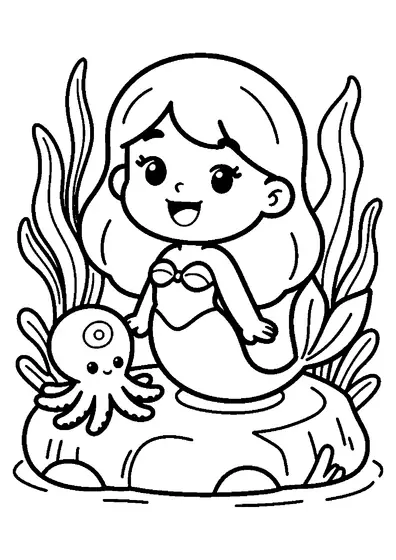
A tranquil marine scene depicts a mermaid swaying quietly in a seagrass hammock suspended between coral trunks.

A4 format (landscape), black outlines on a white background · for home and classroom use
All coloring pages: Mermaid Coloring Pages
Similar coloring pages: Mermaid Coloring Pages




What else can you print? Free, no account needed
Custom Name Coloring Pages
Enter your child's name to generate a custom coloring page featuring large outline letters to color and decorate.
Open generator →Connect the Dots Generator
Eight connect-the-dots pictures across three difficulty levels. Features faint outline guides for younger children and dots only for older kids.
Open generator →Printables
Worksheets, tracing lines, mazes and dot-to-dots in A4.
Browse printables →
Restful Underwater Haven Among Coral Structures
Deep within an ocean sanctuary, a mermaid relaxes in a hammock woven from marine grasses, strung securely between coral-covered tree trunks. Submerged vegetation and living coral form a peaceful resting spot beneath the ocean waves.
Seagrass Meadows and Living Coral Structures
Seagrasses are true flowering plants adapted to submerged saltwater life, forming dense underwater meadows that stabilize oceanic sediment. Coral polyps often colonize submerged wooden or mineral structures, encrusting them with vibrant, living limestone layers over many years. Marine animals frequently utilize dense seagrass beds as protected zones for resting and hiding from ocean currents.
Natural Shades of Seagrass, Coral, and Aquatic Environments
- Woven hammock: Olive green, dried seagrass brown, or muted khaki
- Coral-covered trunks: Rust red, warm orange, dusty purple, or yellow-brown
- Mermaid scales: Sapphire blue, coral pink, or jade green
- Ocean background: Deep navy, teal, or soft cyan