
Pearl Shell Among Sea Anemones
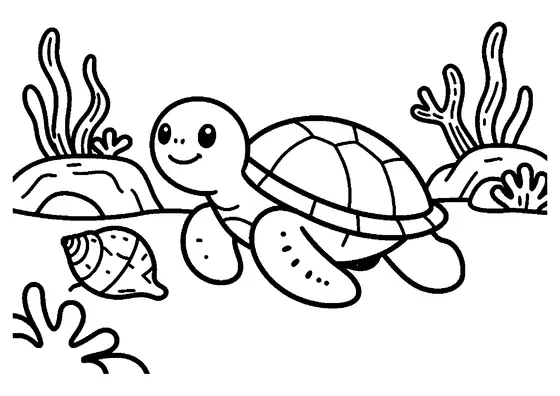
A small sea turtle glides near an open shell displaying a shiny pearl surrounded by soft sea anemones.

A4 format (landscape), black outlines on a white background · for home and classroom use
All coloring pages: Mermaid Coloring Pages
Similar coloring pages: Mermaid Coloring Pages



What else can you print? Free, no account needed
Custom Name Coloring Pages
Enter your child's name to generate a custom coloring page featuring large outline letters to color and decorate.
Open generator →Connect the Dots Generator
Eight connect-the-dots pictures across three difficulty levels. Features faint outline guides for younger children and dots only for older kids.
Open generator →Printables
Worksheets, tracing lines, mazes and dot-to-dots in A4.
Browse printables →
A Sea Turtle Exploring an Open Pearl Shell
This underwater scene portrays a young sea turtle swimming close to a wide-open mollusk shell that holds a round pearl. Soft, swaying sea anemones root themselves nearby, creating a protected marine environment on the ocean floor.
How Pearls and Sea Anemones Form Underwater
Natural pearls are formed inside oysters and clams when an irritant, such as a tiny grain of sand, gets trapped inside the shell. The mollusk coats the intruder with smooth layers of nacre over several years until a lustrous gem develops.
Natural Colors of Sea Turtles, Pearls, and Anemones
- Baby sea turtle: dark green, olive brown, with cream yellow underbelly
- Pearl: iridescent white, cream, pale pink, or metallic silver
- Sea anemones: vibrant magenta, lime green, orange, and pale yellow
- Oyster shell: rough grayish brown on the outside and pearly white inside