
Mermaid Reading a Shell Map at a Stone Table
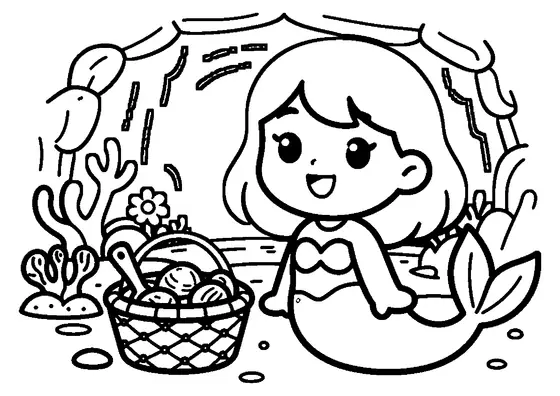
A scholarly sea maiden studies an ancient shell map positioned on a sturdy stone table inside an underwater library.

A4 format (portrait), black outlines on a white background · for home and classroom use
All coloring pages: Mermaid Coloring Pages
Similar coloring pages: Mermaid Coloring Pages




What else can you print? Free, no account needed
Custom Name Coloring Pages
Enter your child's name to generate a custom coloring page featuring large outline letters to color and decorate.
Open generator →Connect the Dots Generator
Eight connect-the-dots pictures across three difficulty levels. Features faint outline guides for younger children and dots only for older kids.
Open generator →Printables
Worksheets, tracing lines, mazes and dot-to-dots in A4.
Browse printables →
Reading a Shell Map in an Underwater Library
Inside a peaceful marine repository of knowledge, a sea maiden sits beside a carved stone table to inspect an intricate map crafted from sea shells. The serene library setting combines ancient stone architectural elements with maritime ocean themes. Surrounded by quiet undersea surroundings, the scene highlights a moment of focus and discovery.
The Art of Historical Mapmaking and Shell Art
Before modern navigation tools existed, cartographers crafted ocean maps using natural materials like carved shells, palm fibers, and polished stones. Ancient coastal cultures used shell maps to chart ocean currents, island positions, and dangerous underwater reefs for boat travelers. Stone tables submerged under water preserve structural integrity for centuries without deteriorating from sea salinity or gentle currents.
Natural Colors of Stone, Shells, and Sea Features
- Carved stone table: ocean-washed slate gray, granite gray, or mossy tan
- Shell map pieces: iridescent mother-of-pearl, soft cream, coral pink, or tan
- Sea maiden tail scales: shimmering emerald green, ocean blue, or pearl silver
- Pinned hair style: dark chestnut brown, auburn, blonde, or raven black