
Mermaid in a Seaweed Forest
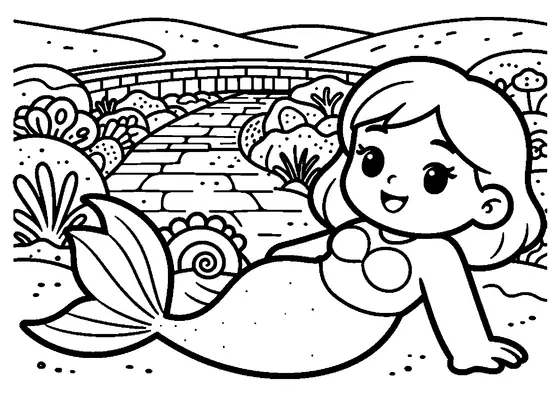
An ocean setting portrays a mermaid swimming with a large shell through a tall forest of broad seaweed.

A4 format (portrait), black outlines on a white background · for home and classroom use
All coloring pages: Mermaid Coloring Pages
Similar coloring pages: Mermaid Coloring Pages


What else can you print? Free, no account needed
Custom Name Coloring Pages
Enter your child's name to generate a custom coloring page featuring large outline letters to color and decorate.
Open generator →Connect the Dots Generator
Eight connect-the-dots pictures across three difficulty levels. Features faint outline guides for younger children and dots only for older kids.
Open generator →Printables
Worksheets, tracing lines, mazes and dot-to-dots in A4.
Browse printables →
Journey Through an Underwater Seaweed Forest
A mermaid swims through a vertical ocean grove filled with tall, broad-leafed seaweed plants. She carries a large shell alongside her as she navigates through the dense aquatic foliage stretching upward toward the light.
Marine Life in Kelp and Seaweed Forests
Underwater seaweed forests, often composed of giant kelp species, rank among the most productive ecosystems on Earth. These tall marine plants can grow up to two feet per day in cool, nutrient-rich coastal waters. The thick blades form vertical canopy towers that provide shelter, food, and camouflage for hundreds of marine species.
Natural Shades of Marine Seaweed
- Broad seaweed leaves: Deep olive green, forest green, brownish green, and yellow-gold
- Sea shell: Warm bronze, tan, pearl white, and soft orange
- Mermaid tail: Seafoam green, turquoise, or deep navy blue
- Ocean water column: Blue-green, aquamarine, and dark teal
- Sunlight filtering through plants: Bright lime green and soft yellow