
Hermit Crab on a Sandy Hill Surrounded by Conchs
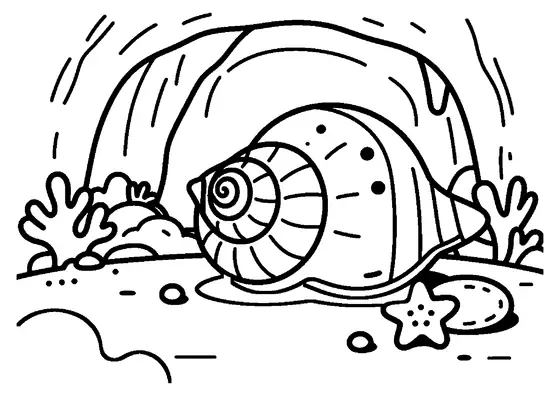
A tiny hermit crab walks along a sandy ocean mound surrounded by branching fire coral and weathered conch shells.

A4 format (landscape), black outlines on a white background · for home and classroom use
All coloring pages: Mermaid Coloring Pages
Similar coloring pages: Mermaid Coloring Pages


What else can you print? Free, no account needed
Custom Name Coloring Pages
Enter your child's name to generate a custom coloring page featuring large outline letters to color and decorate.
Open generator →Connect the Dots Generator
Eight connect-the-dots pictures across three difficulty levels. Features faint outline guides for younger children and dots only for older kids.
Open generator →Printables
Worksheets, tracing lines, mazes and dot-to-dots in A4.
Browse printables →
Hermit Crab on a Sandy Shoal Surrounded by Conchs
Across a sunlit sandy hill beneath ocean waves, a small crustacean moves cautiously while carrying its protective home. Scattered around the sandy shoal rest heavy conch shells and upright branching fire coral structures rooted into the seafloor. This coastal marine setting reflects the active daily life of small shoreline creatures.
Fascinating Facts About Hermit Crabs and Fire Coral
Unlike true crabs, hermit crabs possess soft abdomen areas that require them to find empty snail shells for protection throughout their life cycle. Fire coral is not a true coral but a colonial marine organism closely related to jellyfish that inflicts a mild stinging sensation when touched. As hermit crabs outgrow their current shell, they search along sandy bottoms to test and move into larger abandoned conch shells.
True Colors of Hermit Crabs and Reef Shells
- Hermit crab legs and body: orange-red, reddish-brown, tan, or striped purple
- Conch shell exterior: weathered cream, pinkish-orange, or sandy brown
- Branching fire coral: mustard yellow, brownish-orange, or pale yellow-tan
- Sandy ocean floor: light cream, beige, or pale golden gray