
Mermaid by a Sunken Aqueduct
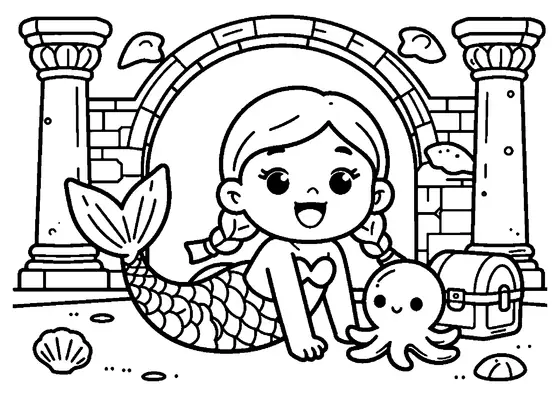
A mermaid swims along the massive stone arches and water channel of an ancient aqueduct submerged on the seabed.

A4 format (landscape), black outlines on a white background · for home and classroom use
All coloring pages: Mermaid Coloring Pages
Similar coloring pages: Mermaid Coloring Pages




What else can you print? Free, no account needed
Custom Name Coloring Pages
Enter your child's name to generate a custom coloring page featuring large outline letters to color and decorate.
Open generator →Connect the Dots Generator
Eight connect-the-dots pictures across three difficulty levels. Features faint outline guides for younger children and dots only for older kids.
Open generator →Printables
Worksheets, tracing lines, mazes and dot-to-dots in A4.
Browse printables →
Sunken Stone Aqueduct beneath the Sea
This underwater scene depicts a mermaid swimming near an ancient stone aqueduct located on the ocean floor. The submerged structure includes massive masonry arches and an elevated water channel that now rests quietly underwater.
How Ancient Structures Become Submerged
Throughout history, coastal cities and stone structures have sunk underwater due to earthquakes, soil liquefaction, and rising sea levels. Ancient Roman ports and aqueducts built along the Mediterranean coast were often submerged over centuries. Today, these stone ruins serve as artificial reefs that support thriving marine ecosystems.
Colors of Submerged Stone Ruins
- Stone aqueduct arches: Weathered underwater masonry turns muted slate gray, dull olive, or brownish tan from mineral deposits.
- Marine growth on stone: Algae and encrusting sponges covering underwater ruins appear in shades of moss green and rust brown.
- Mermaid tail: Open water marine life frequently features shimmering shades of emerald green, seafoam, or royal blue.
- Ocean channel floor: Sandy seabed around ancient ruins consists of pale beige sand and darker gravel particles.