
Mermaid by Underwater Column Ruins
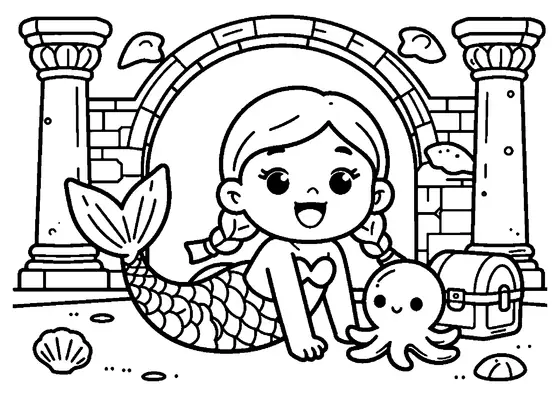
An underwater ocean scene featuring a mermaid swimming near the stone column ruins of a submerged ancient temple.

A4 format (landscape), black outlines on a white background · for home and classroom use
All coloring pages: Mermaid Coloring Pages
Similar coloring pages: Mermaid Coloring Pages




What else can you print? Free, no account needed
Custom Name Coloring Pages
Enter your child's name to generate a custom coloring page featuring large outline letters to color and decorate.
Open generator →Connect the Dots Generator
Eight connect-the-dots pictures across three difficulty levels. Features faint outline guides for younger children and dots only for older kids.
Open generator →Printables
Worksheets, tracing lines, mazes and dot-to-dots in A4.
Browse printables →
Submerged Temple Ruins and Mermaids
Submerged architecture in ocean waters provides a setting where historical ruins meet mythical sea creatures. A mermaid near stone temple columns reflects stories of lost underwater cities, where marble pillars rest beneath the waves. Ancient structures that sank due to sea level changes or earthquakes gradually become integrated into marine environments.
Facts About Underwater Ruins
Stone structures submerged deep in seawater can remain preserved for thousands of years because low oxygen levels reduce decay. Over centuries, minerals from saltwater solidify around fallen pillars, causing them to blend directly into the seabed geology. Ancient Mediterranean coastal cities contain real sunken temples that modern archaeologists continue to map and study today.
Real Colors of Ocean Elements
- Mermaid tail: gray or greenish silver in classic folklore traditions based on fish scales
- Stone columns: light gray, beige, or brown depending on limestone and granite composition
- Ocean water: deep blue near the surface transitioning to dark teal in deeper layers
- Sunken masonry algae: dark green or yellowish olive growing on wet stone surfaces