
Mermaid at an Underwater Seashell Stall
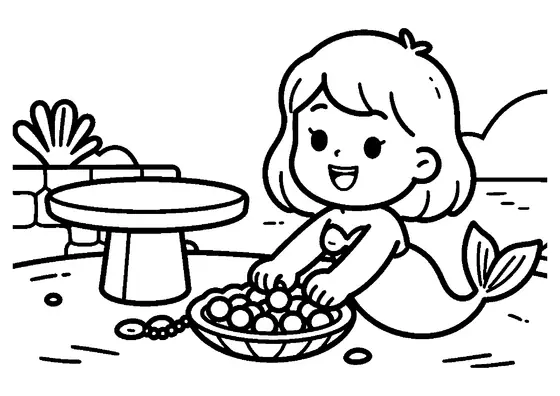
An ocean market setting depicts a mermaid shopkeeper displaying a collection of polished sea shells across a wooden stall.

A4 format (portrait), black outlines on a white background · for home and classroom use
All coloring pages: Mermaid Coloring Pages
Similar coloring pages: Mermaid Coloring Pages


What else can you print? Free, no account needed
Custom Name Coloring Pages
Enter your child's name to generate a custom coloring page featuring large outline letters to color and decorate.
Open generator →Connect the Dots Generator
Eight connect-the-dots pictures across three difficulty levels. Features faint outline guides for younger children and dots only for older kids.
Open generator →Printables
Worksheets, tracing lines, mazes and dot-to-dots in A4.
Browse printables →
Ocean Markets and Shell Displays
Stories about aquatic kingdoms often reimagine human customs within an underwater world. This market scene features a smiling mermaid merchant arranging shiny sea shells on a wooden display table. The bustling seabed trade scene offers a creative view into submerged community life beneath the waves.
Shell Polishing and Wooden Preservation Submerged
Natural sea shells acquire their smooth, reflective surfaces through the tumbling action of ocean waves against fine sand particles. While wood underwater eventually degrades due to marine organisms, dense hardwoods high in natural resins can endure immersion for long periods. Submerged wooden structures often become anchor points for sponges and tiny marine life.
Real Colors of Polished Shells and Submerged Wood
- Polished sea shells: Showcase iridescent mother-of-pearl whites, pale pinks, corals, and glossy spirals of amber.
- Submerged wooden market stall: Appears in deep weathered brown, dark charcoal gray, or olive-tinted timber.
- Mermaid tail scales: Commonly imagined in shades of emerald green, seafoam cyan, or deep shimmering indigo.
- Ocean floor sand: Ranges from soft ivory and golden yellow to coarse grayish brown.