
Wooden Bucket with Thick Rope
Heavy wooden buckets attached to thick ropes were essential everyday tools for fetching water in medieval settlements.

A4 format (portrait), black outlines on a white background · for home and classroom use
All coloring pages: Knights and Castles Coloring Pages
Similar coloring pages: Knights and Castles Coloring Pages




What else can you print? Free, no account needed
Custom Name Coloring Pages
Enter your child's name to generate a custom coloring page featuring large outline letters to color and decorate.
Open generator →Connect the Dots Generator
Eight connect-the-dots pictures across three difficulty levels. Features faint outline guides for younger children and dots only for older kids.
Open generator →Printables
Worksheets, tracing lines, mazes and dot-to-dots in A4.
Browse printables →
Traditional Wooden Water Bucket
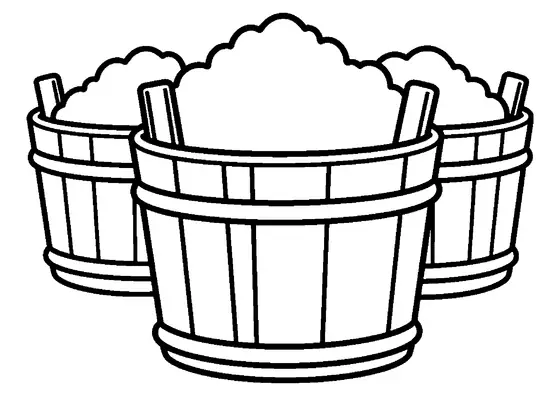
Constructed from fitted wooden staves held together by metal or wooden hoops, buckets with thick ropes were basic daily equipment in historic castles and villages. These sturdy containers were built to withstand constant use when drawing water from deep wells or rivers.
Coopers and Medieval Bucket Making
Specialized woodworkers called coopers crafted medieval buckets using carefully shaped staves of oak, cedar, or pine. The wood swelled when wet, creating a tight seal between the staves that kept water from leaking out during transport.
Real Colors of a Wooden Bucket
- Wooden staves: warm brown or weathered tan
- Metal hoops: dark gray or rusted iron
- Coiled rope: natural beige or off-white hemp
- Bucket interior: damp dark brown wood