
Owl on a Castle Stone
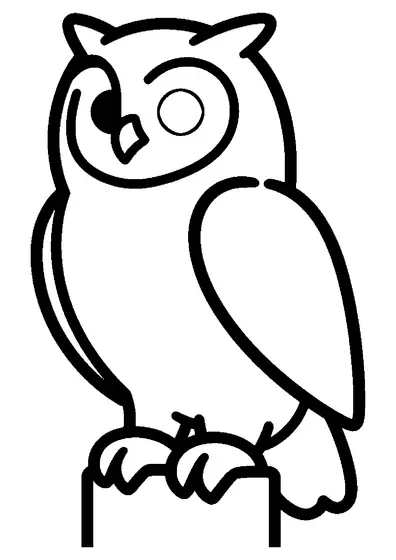
A nocturnal owl rests on a carved stone block near a fortress in this nighttime bird illustration.

A4 format (portrait), black outlines on a white background · for home and classroom use
All coloring pages: Knights and Castles Coloring Pages
Similar coloring pages: Knights and Castles Coloring Pages



What else can you print? Free, no account needed
Custom Name Coloring Pages
Enter your child's name to generate a custom coloring page featuring large outline letters to color and decorate.
Open generator →Connect the Dots Generator
Eight connect-the-dots pictures across three difficulty levels. Features faint outline guides for younger children and dots only for older kids.
Open generator →Printables
Worksheets, tracing lines, mazes and dot-to-dots in A4.
Browse printables →
A Nocturnal Owl Perched on Castle Masonry
Owls frequently made their homes around castle grounds, using high stone ledges as lookout vantage points for hunting. This illustration depicts a realistic owl perched on a stone block. The quiet night bird observes its surroundings from an elevated masonry resting spot near the fortress.
How Owls Hunt Around Stone Structures
Owls possess specialized feathers with fringe-like edges that muffle air turbulence, granting them nearly silent flight when swooping down from stone ledges. Their large, forward-facing eyes are fixed in sockets, requiring them to turn their heads up to 270 degrees to look around. Old stone buildings attracted rodents near grain stores, making castle ruins ideal hunting territories for resident owls.
Realistic Colors of Owls and Building Stone
- Owl feathers: Mottled brown, warm ochre, and soft cream patterns
- Eyes: Deep golden yellow, amber, or dark orange-brown
- Beak and talons: Dark slate gray or pale yellowish horn color
- Stone block: Weathered granite gray, mossy green, or tan sand
- Facial disc feathers: Pale off-white or silvery gray