
Knight Salting an Icy Path
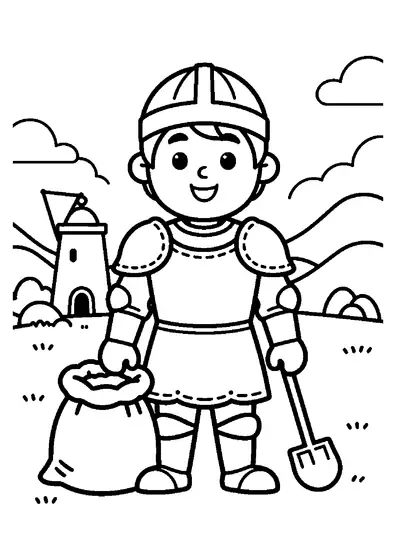
Spreading rock salt over a frozen walkway prevents slipping during cold winter weather at the castle.

A4 format (portrait), black outlines on a white background · for home and classroom use
All coloring pages: Knights and Castles Coloring Pages
Similar coloring pages: Knights and Castles Coloring Pages



What else can you print? Free, no account needed
Custom Name Coloring Pages
Enter your child's name to generate a custom coloring page featuring large outline letters to color and decorate.
Open generator →Connect the Dots Generator
Eight connect-the-dots pictures across three difficulty levels. Features faint outline guides for younger children and dots only for older kids.
Open generator →Printables
Worksheets, tracing lines, mazes and dot-to-dots in A4.
Browse printables →
Winter Safety on the Castle Pathway
Cold temperatures often turn stone castle paths into slippery hazards covered in frost and packed snow. Using a hand scoop to scatter salt from large storage sacks lowers the freezing point of ice, quickly melting dangerous patches to create a safe walking surface for everyone.
The Chemistry of Melting Ice with Rock Salt
When coarse rock salt dissolves into thin surface water on ice, it creates a salty brine solution that freezes at lower temperatures than pure water. This simple chemical process prevents liquid water from refreezing into slick sheets during frosty days.
True Colors of Winter Castle Grounds
- Snow covering path: Soft white or pale blue-gray shadow
- Salt inside bag: Off-white or coarse light gray crystal
- Salt storage bag: Natural burlap tan or brown canvas
- Scoop tool: Dark metal gray or carved wood brown