
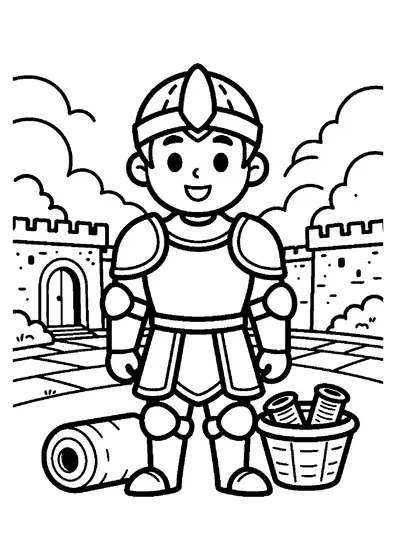
Smiling Knight Polishing the Castle Bell
Cleaning a massive bronze bell in the courtyard requires steady care using a bucket and a scrub brush.

A4 format (portrait), black outlines on a white background · for home and classroom use
All coloring pages: Knights and Castles Coloring Pages
Similar coloring pages: Knights and Castles Coloring Pages



What else can you print? Free, no account needed
Custom Name Coloring Pages
Enter your child's name to generate a custom coloring page featuring large outline letters to color and decorate.
Open generator →Connect the Dots Generator
Eight connect-the-dots pictures across three difficulty levels. Features faint outline guides for younger children and dots only for older kids.
Open generator →Printables
Worksheets, tracing lines, mazes and dot-to-dots in A4.
Browse printables →
Care and Maintenance of the Castle Courtyard Bell
Tower and courtyard bells served as the primary signaling system across castle grounds, ringing to mark daily hours or announce important gatherings. Keeping heavy metal bells free of tarnish and grime preserved their bright tone and protected the bronze alloy from environmental corrosion.
The Craft of Medieval Bell Casting
Giant bells were cast by pouring molten bronze—a mixture of copper and tin—into precise clay molds. Once cooled, the metal surface required careful polishing to remove rough spots and ensure a clear tone when struck by a clapper.
Genuine Colors of Metal Bell Maintenance
- Giant courtyard bell: Tarnished bronze brown, dark brass yellow, or aged green patina
- Scrub brush handle and bristles: Light timber brown and natural straw yellow
- Bucket container: Medium oak brown with dark gray iron bands
- Courtyard stonework: Cobblestone gray or packed earth brown