
Knight with Flour Bag at the Mill
Freshly ground flour arrives from the local windmill as a knight assists villagers with essential daily supplies.

A4 format (portrait), black outlines on a white background · for home and classroom use
All coloring pages: Knights and Castles Coloring Pages
Similar coloring pages: Knights and Castles Coloring Pages



What else can you print? Free, no account needed
Custom Name Coloring Pages
Enter your child's name to generate a custom coloring page featuring large outline letters to color and decorate.
Open generator →Connect the Dots Generator
Eight connect-the-dots pictures across three difficulty levels. Features faint outline guides for younger children and dots only for older kids.
Open generator →Printables
Worksheets, tracing lines, mazes and dot-to-dots in A4.
Browse printables →
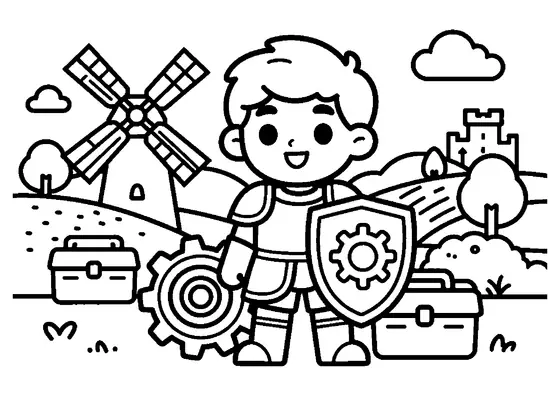
A Knight Delivering Flour at the Mill
A helpful knight delivers fresh flour from a nearby windmill to support the local villagers. Wooden scoops and sturdy sacks hold the finely ground grain processed by wind power. Milling grain was one of the most vital tasks in historical settlement life.
How Medieval Windmills Processed Grain
Traditional windmills used giant wooden sails covered in canvas to catch wind currents. The spinning mechanism turned massive granite millstones inside the upper tower, grinding whole wheat into fine flour. Millers often worked alongside local helpers to pack and transport heavy flour sacks to nearby village bakeries.
Real Colors of a Windmill Scene
- Flour sack: off-white or beige unbleached linen fabric
- Wooden scoop: warm brown polished oak timber
- Windmill sails: pale canvas cloth and weathered brown wood
- Knight armor: metallic silver gray or steel gray