
Knight Cleaning a Stone Fountain
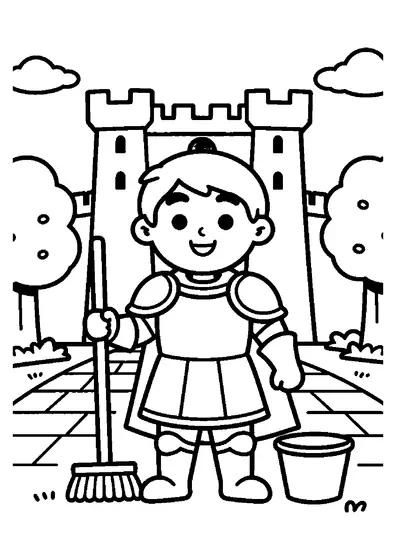
A knight uses a scrub brush and sponge to clean the central stone fountain located in the open castle courtyard.

A4 format (portrait), black outlines on a white background · for home and classroom use
All coloring pages: Knights and Castles Coloring Pages
Similar coloring pages: Knights and Castles Coloring Pages



What else can you print? Free, no account needed
Custom Name Coloring Pages
Enter your child's name to generate a custom coloring page featuring large outline letters to color and decorate.
Open generator →Connect the Dots Generator
Eight connect-the-dots pictures across three difficulty levels. Features faint outline guides for younger children and dots only for older kids.
Open generator →Printables
Worksheets, tracing lines, mazes and dot-to-dots in A4.
Browse printables →
Maintaining the Castle Courtyard Fountain
Courtyard fountains served both decorative and practical purposes in medieval fortresses. They provided clean water for daily chores and created a central gathering place for residents within the castle walls. Scrubbing stone basins regularly prevented moss and algae from cluttering the fresh water supply.
Historical Facts About Castle Courtyard Fountains
Medieval stone fountains were fed by underground aqueducts, natural mountain springs, or rainwater collection cisterns. Skilled stonemasons carved intricate basins from solid limestone or granite to withstand weather. Courtyards functioned as the heart of castle life, where trade, blacksmithing, and social gatherings took place.
Authentic Colors of Stone Courtyards
- Stone fountain: granite gray or weathered limestone tan
- Cleaning sponge: natural amber or pale yellow
- Scrub brush handle: light pine wood
- Courtyard paving: slate gray and earth brown
- Water in basin: clear sky blue