
Castle Garden Wheelbarrow
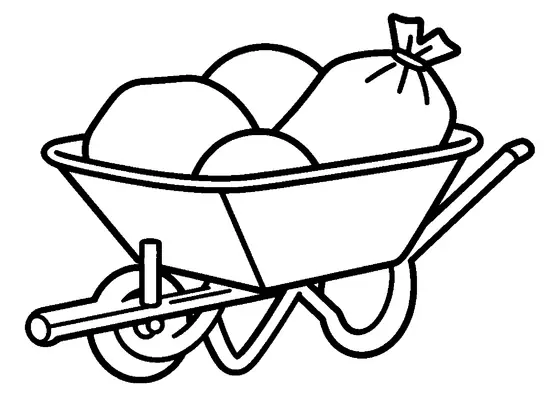
A wooden garden wheelbarrow holds a fresh harvest of vegetables gathered from the castle grounds.

A4 format (landscape), black outlines on a white background · for home and classroom use
All coloring pages: Knights and Castles Coloring Pages
Similar coloring pages: Knights and Castles Coloring Pages


What else can you print? Free, no account needed
Custom Name Coloring Pages
Enter your child's name to generate a custom coloring page featuring large outline letters to color and decorate.
Open generator →Connect the Dots Generator
Eight connect-the-dots pictures across three difficulty levels. Features faint outline guides for younger children and dots only for older kids.
Open generator →Printables
Worksheets, tracing lines, mazes and dot-to-dots in A4.
Browse printables →
Wooden Wheelbarrow with Garden Vegetables
Castle gardens supplied fresh food daily for the royal kitchen, guards, and resident workers. A wooden wheelbarrow filled with harvested vegetables illustrates the vital role of garden transport in moving heavy loads of produce across castle grounds.
Castle Gardening and Harvesting
Medieval castle gardens grew a wide variety of cold-hardy vegetables, herbs, and root crops inside protected courtyard walls. Single-wheeled barrows allowed gardeners to easily navigate narrow paths, uneven cobbles, and garden beds while carrying bulky loads. Gardeners relied on basic wooden wheelbarrows to move soil, compost, and harvested crops without straining their backs.
Real Colors of Garden Harvests
- Wooden wheelbarrow body: warm brown or aged timber
- Iron-rimmed wheel: dark gray or black
- Fresh leafy vegetables: vibrant green
- Root vegetables: deep orange or red-brown
- Garden soil residue: earthy brown