
Dragon in a Farmyard
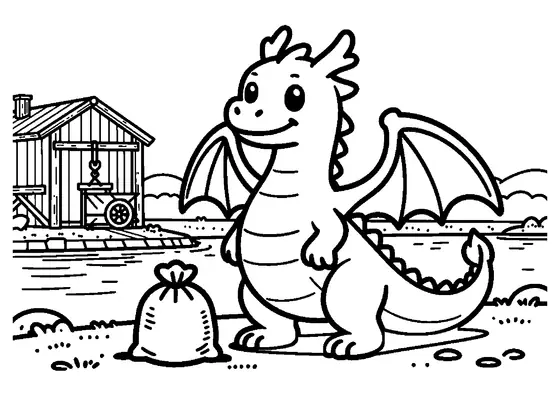
A peaceful countryside farmyard serves as the backdrop for a friendly dragon standing near a wooden wagon wheel.

A4 format (landscape), black outlines on a white background · for home and classroom use
All coloring pages: Dragon Coloring Pages
Similar coloring pages: Dragon Coloring Pages



What else can you print? Free, no account needed
Custom Name Coloring Pages
Enter your child's name to generate a custom coloring page featuring large outline letters to color and decorate.
Open generator →Connect the Dots Generator
Eight connect-the-dots pictures across three difficulty levels. Features faint outline guides for younger children and dots only for older kids.
Open generator →Printables
Worksheets, tracing lines, mazes and dot-to-dots in A4.
Browse printables →
Friendly Dragon Visiting a Country Farmyard
A mythical dragon visits a quiet agricultural farmyard, standing near a classic wooden wagon wheel. The rural setting captures the charm of traditional farm life, combining elements of farm machinery with countryside architecture. Rustic farms provide a calm environment where agricultural tools and timber structures define daily farmwork.
History and Utility of Wooden Wagon Wheels
Wooden wagon wheels were essential components of rural transportation for centuries before modern rubber tires were invented. Traditional wheelwrights crafted them from tough hardwoods like oak or elm, securing the outer rim with an iron hoop called a tire. These sturdy wheels allowed farmers to transport heavy harvests, firewood, and equipment across unpaved roads and dirt fields.
Real-World Colors of Farmyard Surroundings
- Dragon hide: Mythical dragons are often depicted in warm shades like burnt orange, earthy red, or soft green.
- Wooden wagon wheel: Weathered hardwood displays medium brown tones, while aged timber often turns a silvery gray color.
- Iron wheel rim: The protective metal band around a wagon wheel features a dark gray or tarnished metallic finish.
- Farmyard soil: Rich agricultural dirt ranges from deep dark brown to reddish-brown depending on moisture and clay content.