
Dragon Beside a Fortified Castle Wall
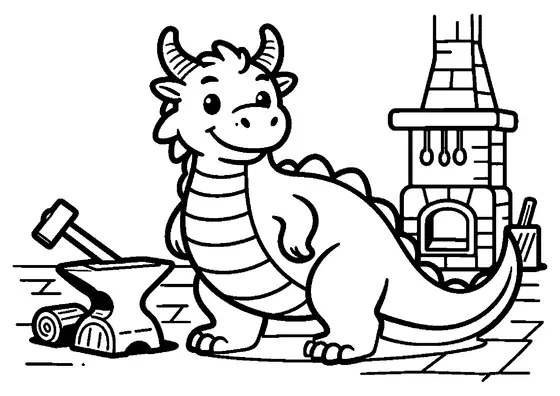
A dragon stands guard near a massive stone castle wall alongside a defensive shield and stacked stone cannonballs.

A4 format (portrait), black outlines on a white background · for home and classroom use
All coloring pages: Dragon Coloring Pages
Similar coloring pages: Dragon Coloring Pages




What else can you print? Free, no account needed
Custom Name Coloring Pages
Enter your child's name to generate a custom coloring page featuring large outline letters to color and decorate.
Open generator →Connect the Dots Generator
Eight connect-the-dots pictures across three difficulty levels. Features faint outline guides for younger children and dots only for older kids.
Open generator →Printables
Worksheets, tracing lines, mazes and dot-to-dots in A4.
Browse printables →
Guardian Dragon at Fortress Castle Walls
A dragon is positioned by a fortified stone castle wall, near defensive gear including a large shield and stone cannonballs. Medieval fortifications were built with thick stone walls and strategic watch points to defend kingdom strongholds. The presence of stone ammunition and defensive heraldry highlights the historical military engineering of ancient fortresses.
Medieval Castle Defense Systems
Medieval castle walls were engineered using thick layers of cut stone filled with rubble and mortar to withstand heavy sieges. Defenders used stone cannonballs and catapult projectiles carved from dense limestone or granite to protect battlements. Large wooden shields reinforced with iron plates were positioned along walls to shield archers and guards during defense operations.
Colors of Medieval Fortifications and Gear
- Dragon scales: Dragons in military lore often feature slate gray, dark bronze, or deep crimson red scales.
- Castle stone walls: Masonry fortress walls consist of natural stone in shades of light gray, beige, and weathered ash gray.
- Defensive shield: Historical heraldic shields featured vibrant coat-of-arms colors like royal blue, crimson, gold, or silver.
- Stone cannonballs: Carved projectile stones typically present a uniform matte gray or off-white limestone texture.