
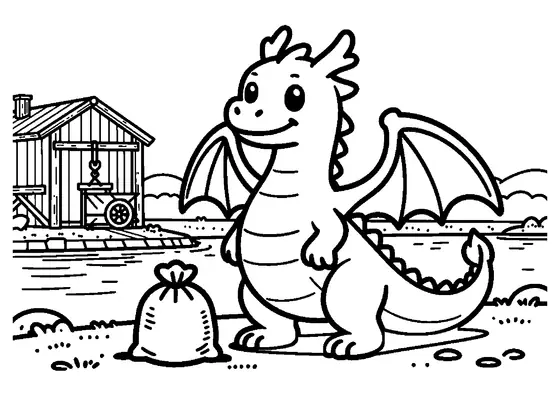
Dragon at the Entrance to a Rock Tunnel
A legendary dragon waits near a signpost by the entrance of a stone tunnel carved into the rocks.

A4 format (landscape), black outlines on a white background · for home and classroom use
All coloring pages: Dragon Coloring Pages
Similar coloring pages: Dragon Coloring Pages





What else can you print? Free, no account needed
Custom Name Coloring Pages
Enter your child's name to generate a custom coloring page featuring large outline letters to color and decorate.
Open generator →Connect the Dots Generator
Eight connect-the-dots pictures across three difficulty levels. Features faint outline guides for younger children and dots only for older kids.
Open generator →Printables
Worksheets, tracing lines, mazes and dot-to-dots in A4.
Browse printables →
A Fantasy Dragon by the Stone Pass
In this scene, a dragon rests near a signpost positioned at the mouth of a tunnel cut into rugged mountain rocks. The creature occupies the pathway right before the dark entrance of the passage. The surrounding rock formations form a natural arch over the trail leading into the hill.
Legendary Dragons in Cave Folklore
In traditional European myths, dragons were often described as guardians of hidden underground caverns and mountain passages. Storytellers envisioned these legendary reptiles nesting inside deep rock tunnels to protect subterranean treasures from adventurous travelers. High cavern entrances provided mythical beasts with a vantage point to watch over nearby valleys.
Natural Colors of Dragons and Mountain Rocks
- Dragon scales: Deep green, crimson red, or dark bronze were common shades chosen in historic illustrations to represent dragon skin.
- Rock tunnel walls: Granite and limestone rocks range from pale ash gray to dark charcoal with veins of quartz.
- Signpost: Aged timber typically turns weathered brown or silver-gray after long exposure to outdoor wind and moisture.
- Dragon eyes: Legendary depictions often assign reptiles bright golden, amber, or slit-pupilled yellow eyes.