
Wood and Resin Workshop
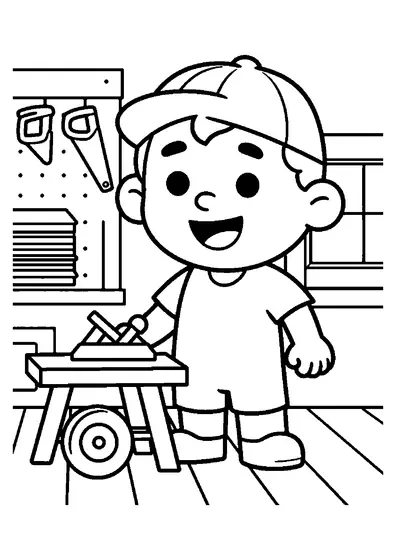
A craftsperson stands beside a smooth tabletop made by combining natural wood with decorative resin.

A4 format (landscape), black outlines on a white background · for home and classroom use
All coloring pages: Jobs and Professions Coloring Pages
Similar coloring pages: Jobs and Professions Coloring Pages



What else can you print? Free, no account needed
Custom Name Coloring Pages
Enter your child's name to generate a custom coloring page featuring large outline letters to color and decorate.
Open generator →Connect the Dots Generator
Eight connect-the-dots pictures across three difficulty levels. Features faint outline guides for younger children and dots only for older kids.
Open generator →Printables
Worksheets, tracing lines, mazes and dot-to-dots in A4.
Browse printables →
The Wood and Resin Workshop
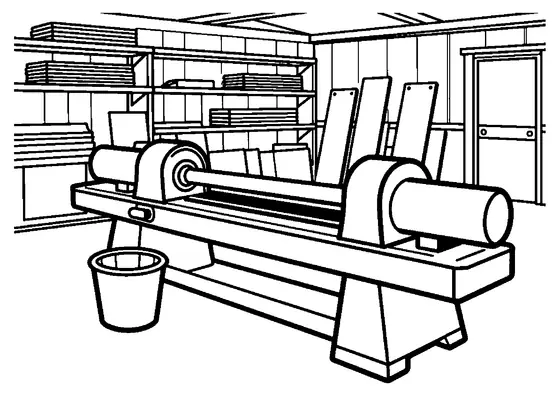
This page features a short-haired furniture maker and a finished wood-and-resin tabletop. Oak provides the solid wooden sections, while resin fills or joins selected areas to create a continuous surface. After the materials have set, careful leveling and polishing can produce the smooth top seen in this modern craft workshop.
Facts About Wood and Resin Furniture
Oak is a hardwood whose visible grain can vary from straight bands to sweeping patterns. Resin begins as a liquid mixture and hardens through a chemical reaction, so makers must measure and combine its components carefully. The wood also needs to be dry and stable because changes in moisture can cause natural boards to expand or contract.
Real-Life Colors of Wood and Resin
- Oak wood: pale tan, honey brown, golden brown, or medium brown
- Oak grain: brown or dark brown against the lighter wood
- Clear resin: transparent, sometimes with a faint amber tint
- Colored resin: blue, green, black, white, or another added pigment
- Craftsperson's hair: naturally black, brown, blond, red, gray, or white