
Young Carpenter at a Workbench in a Woodshop
A young carpenter works at a bench in a woodshop surrounded by hand tools and wooden boards.

A4 format (portrait), black outlines on a white background · for home and classroom use
All coloring pages: Jobs and Professions Coloring Pages
Similar coloring pages: Jobs and Professions Coloring Pages

What else can you print? Free, no account needed
Custom Name Coloring Pages
Enter your child's name to generate a custom coloring page featuring large outline letters to color and decorate.
Open generator →Connect the Dots Generator
Eight connect-the-dots pictures across three difficulty levels. Features faint outline guides for younger children and dots only for older kids.
Open generator →Printables
Worksheets, tracing lines, mazes and dot-to-dots in A4.
Browse printables →
A Young Carpenter at Work
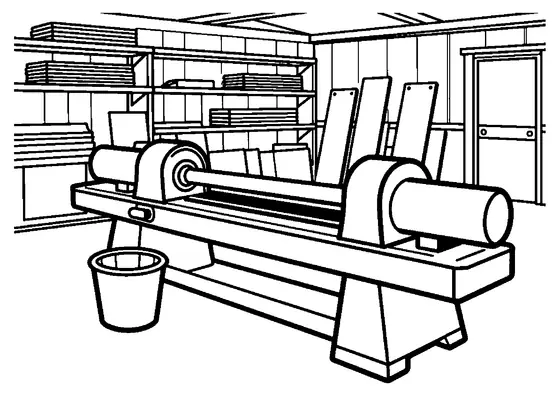
The coloring page depicts a young woodworker at a workbench, with workshop tools and boards visible in the background. A workbench provides a stable surface for measuring, holding, shaping, and joining pieces of wood. Carpenters select tools according to the task and check each measurement before cutting or assembling a project.
Facts About Carpentry Workshops
Wood grain follows the arrangement of fibers that developed as a tree grew, and its direction affects how a board is cut or shaped. A carpenter may use a bench vise or clamps to keep a piece from moving while work is underway. Keeping tools organized also makes it easier to choose the correct one and return it safely after use.
Real-Life Colors in a Woodshop
- Wooden boards: pale tan, golden brown, reddish brown, or dark brown
- Workbench: natural wood tones, often marked by darker wear over time
- Steel tool parts: silver-gray, charcoal, or black
- Tool handles: natural brown wood or painted red, blue, yellow, or black
- Carpenter's hair: naturally black, brown, blond, red, gray, or white