
Papermaker at the Sheet Press
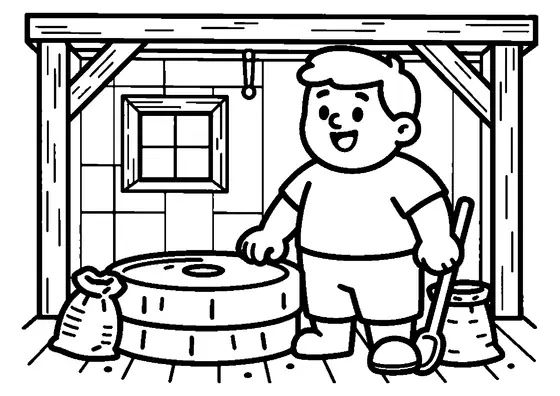
An artisan papermaker works beside a heavy mechanical press, a paper pulp vat, and stacked sheets inside a paper craft shop.

A4 format (landscape), black outlines on a white background · for home and classroom use
All coloring pages: Jobs and Professions Coloring Pages
Similar coloring pages: Jobs and Professions Coloring Pages



What else can you print? Free, no account needed
Custom Name Coloring Pages
Enter your child's name to generate a custom coloring page featuring large outline letters to color and decorate.
Open generator →Connect the Dots Generator
Eight connect-the-dots pictures across three difficulty levels. Features faint outline guides for younger children and dots only for older kids.
Open generator →Printables
Worksheets, tracing lines, mazes and dot-to-dots in A4.
Browse printables →
A Papermaker in a Traditional Paper Workshop
A skilled papermaker stands in a traditional workshop beside a large sheet press. A pulp vat sits in the workspace alongside stacked sheets of newly formed paper, with storage shelves lining the surrounding walls. The arrangement represents the historical craft of converting liquid plant pulp into durable paper.
Facts About Historical Papermaking Techniques
In traditional papermaking, plant fibers such as cotton rags, hemp, or mulberry bark are soaked in water inside a large vat to create a liquid slurry. The papermaker scoops the slurry using a mesh screen frame, allowing water to drain away while leaving a thin, uniform layer of interlocking fibers. Heavy screw presses squeezed out remaining moisture from piles of wet sheets before the paper was hung up to dry naturally on felt blankets.
Authentic Colors of Papermaking Tools and Materials
- Mechanical sheet press: dark cast iron gray or aged oak wood
- Wet paper sheets: soft cream, off-white, or natural ivory tone
- Pulp vat container: weathered cedar brown or galvanized iron gray
- Workshop shelves: dark walnut brown or rustic pine
- Papermaker clothes: indigo blue cotton shirt and brown canvas apron